
Travel insights from Latin America
Skip the Crowds: Why Córdoba and Lonquimay Beat Buenos Aires and Patagonia for Study Abroad Trips
Author Bernie Coote | Published on August 1, 2026
Overtourism is an increasingly stressful phenomenon for both travellers and the places and people they visit.
Iconic sites are increasingly crowded and degraded as a result. People flock to a handful of areas in each region, and prices climb to match demand.
Local communities end up sidelined by an industry that’s supposed to benefit them, and their culture, while traditions become colonised and monetised.
Recently, Ana Cristina, Kagumu’s Community Manager, carried out a series of interviews with community members in Colombia and their experience of the country’s rapidly growing tourism industry. The results gave us valuable insight into the recurring issues that heavy tourism can cause for locals.
We also know that for educators, overtourism can also translate into real practical problems: longer queues eating into itineraries, inflated costs impacting budgets, and diluted cultural encounters that don’t deliver the “wow” moment everyone is hoping for.
To address both of these issues, we have developed some exciting new itineraries that swap the obvious tourist hotspots for hidden gems that offer genuine connections, deeper educational impact, and eye-opening experiences across the Latin American Southern Cone, starting with two study abroad destinations that consistently outperform their famous neighbours.
Smart Swap: Buenos Aires for Córdoba, Argentina
Buenos Aires will always have its charms, but Córdoba offers something the capital increasingly struggles with: a genuinely local energy and easy access to spectacular mountains and a traditional way of life.
Why Buenos Aires isn’t always the best fit for a study abroad program
Buenos Aires remains a fantastic city, and there’s a reason it’s popular with educational institutions (I mean, we also have a great itinerary there!)
But the same historic districts that draw students in – San Telmo’s cobbled streets, Recoleta’s grand architecture, the tango halls of La Boca – are now dealing with the downsides of that popularity.
Queues at major sights eat into precious teaching time, accommodation and restaurant prices have climbed well beyond what they were a few years ago, and the sheer volume of visitors can dilute the kind of genuine, unscripted encounters that make a study abroad program memorable.
None of this makes Buenos Aires a bad choice – but for educators looking for deeper cultural access without the crowds, it’s worth considering an alternative.
The real student study abroad experience
Nicknamed “La Docta” (the learned one), Córdoba is Argentina’s second city and home to the National University of Córdoba, the oldest university in Argentina.
With a huge student population filling its cafés, plazas and cultural centres, visitors will be dropped straight into the rhythm of student life in Argentina.
Córdoba’s colonial roots allow plenty of scope to dive into the history of the country and vividly bring Argentina’s past to life.
Wandering around the immense, UNESCO-listed Jesuit block, students will discover far more about Argentina’s evolution since the 17th century, including the often overlooked cultures of indigenous people and African slave labourers.
Gaucho life and the great outdoors
And when the hedonism and history of the city gets too much, unlike Buenos Aires, it is easy to escape to the majestic Córdoba Sierra, slow down and experience a more traditional way of life.
Córdoba lies on the northwest perimeter of the Pampas, a vast, grassy flatland spanning more than 460,000 sq m, which is dramatically dissected by the jagged Sierra. As you enter Gaucho territory, it may feel like you’ve walked onto the set of a movie.
Gauchos, legendary horsemen and cattle herders, are celebrated as symbols of Argentine identity, resilience, and freedom. Their traditional culture revolves around communal living and a deep connection to the land. Today, this rich heritage is kept alive through distinctive clothing, the communal ritual of yerba mate, open-fire cooking, and vibrant folk music.
For history, sociology, Spanish language, and global citizenship students, it is this cultural blend of historic and provincial traditions, alongside a youthful, cosmopolitan population, that makes Córdoba an alluring alternative to the well-trodden paths of Buenos Aires.
Homestays and host families: living like a local
To make this Argentine experience even more authentic, groups have the opportunity to stay with a host family.
Living day-to-day with a host family gives students a level of cultural immersion that no hotel can match – shared mealtimes, the ritual of yerba mate, and weekend cultural excursions around the Sierra.
It’s also one of the best ways to build real-world Spanish skills, since kitchen-table conversation does more for fluency and confidence than a classroom ever could.
Beyond language gains, host family stays consistently support students’ mental health while abroad, offering the routine, warmth, and sense of belonging that ease culture shock in a new country. Kagumu’s own findings on this echo wider research into student wellbeing abroad: Student Homestay: The Perfect Option for a Study Abroad Program.
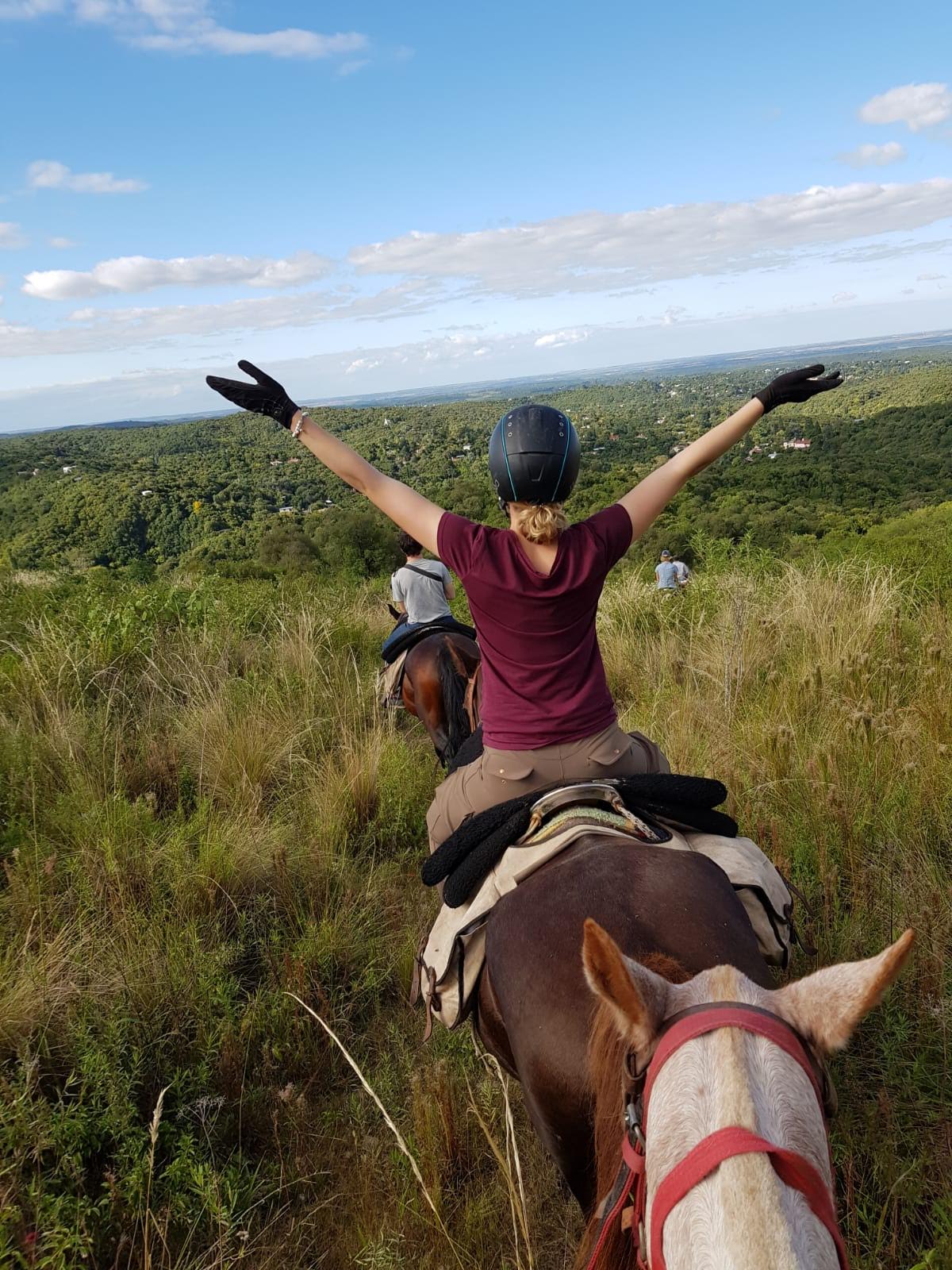
Students on a study abroad program in Córdoba
Why students will love studying abroad in Córdoba:
- Discovering a lively, walkable city that feels like “real” Argentina, not a postcard version of it;
- Building genuine peer-to-peer connections and Spanish practice with local students;
- Living with a host family on a traditional Gaucho farm in Agua de Oro;
- Taking part in cultural activities like asado cook-outs and folk music nights with their host family;
- Exploring the vast landscapes of the Córdoba Sierra.
Itinerary: Córdoba Spanish Immersion – or browse our wider range of Argentina study abroad programs.
Smart Swap: Patagonia for Lonquimay, Chile
Patagonia’s dramatic landscapes are famous for a reason – but that fame comes with crowded trails, high prices and a well-worn tourist circuit that is eroding the fragile ecosystem.
Lonquimay, tucked into Chile’s wild Araucanía region, offers a quieter but equally spectacular alternative.
Getting up close and personal with nature
It is hard to understand why the iconic Andean peaks of Southern Chile are not overrun with tourists seeking connection with the great outdoors.
The landscape of volcanoes, ancient monkey-puzzle (Araucaria) forests, hot springs and dramatic mountain scenery offers “wow” moments that rival Patagonia but without the queues.
These days, it is rare to visit a live volcano and be completely alone. This solitude enables a deeper connection with your surroundings and the opportunity to learn about the beauty and complexity of these fragile ecosystems without feeling like you are contributing to their demise.
The Mapuche native experience
In choosing Lonquimay, the real value for educators lies in the cultural dimension as the region sits within Mapuche and Pehuenche territory.
The Mapuche, meaning “people of the land” in Mapudungun, the native language, are the largest Indigenous group in south-central Chile and, impressively, one of the few that successfully resisted the Incan Empire and Spanish conquistadores.
These days, they continue the fight, this time for environmental conservation and the defense of ancestral territories. Their drive for cultural revival includes welcoming groups for cultural immersion experiences.
For Geography, Environmental Science, Sociology or Global Citizenship students, this is an unusually rich setting – the opportunity to explore indigenous land stewardship, sustainable rural livelihoods and the natural environment side by side, guided by the people who know it best.
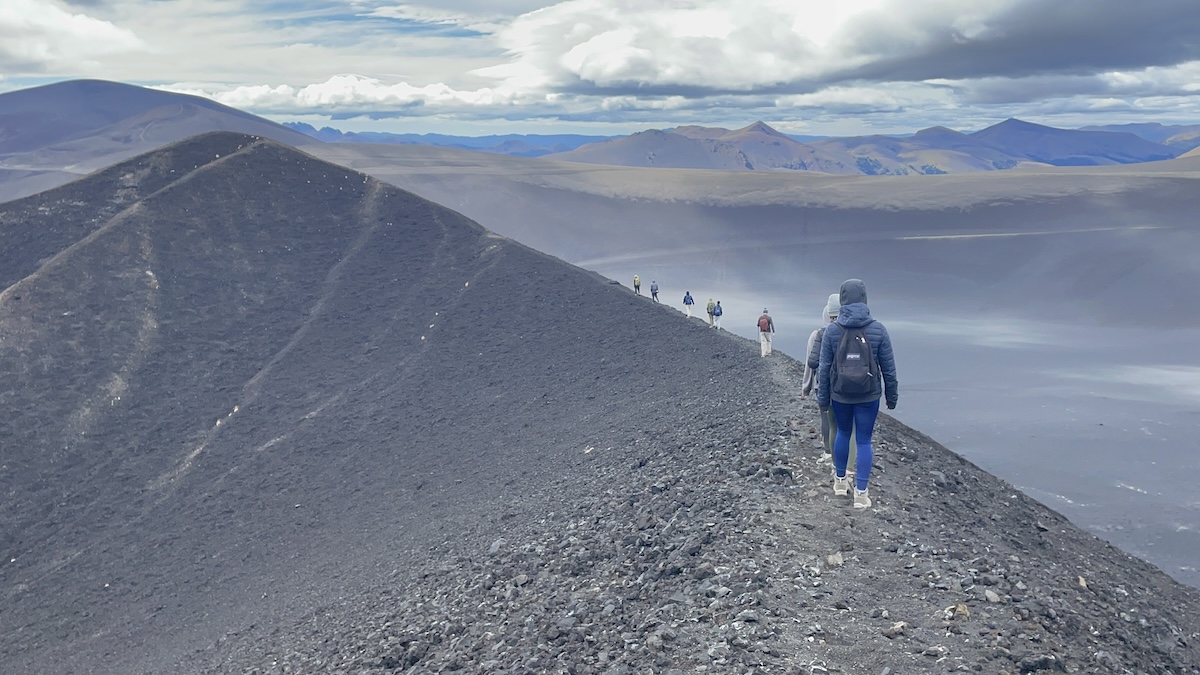
Students walking along a ridge close to Lonquimay
Nature, mental health, and short-term expeditions
Beyond academic learning, the mental health benefits of stepping away from crowded circuits and into genuine quiet are well-documented – nature connection for young people has been proven to have positive impacts on mental health and well-being, as well as promote pro-environmental behaviours.
Even a short-term expedition to Lonquimay gives students the space to disconnect from constant stimulation and reconnect with themselves, their peers and their surroundings. For program leaders balancing student mental health support with academic outcomes, this kind of immersive, unhurried travel does double duty.
Why students will love studying abroad in Lonquimay:
- Connection with wild nature in breathtaking surroundings;
- Having real conversations and hands-on cultural exchange with the wise and highly skilled Mapuche community;
- Being adventurous and heading into the great outdoors.
Itinerary: School Expedition to Southern Chile – or explore all of our Chile study abroad programs.
Planning your study abroad program: semesters and funding
Whether you’re considering Córdoba, Lonquimay, or both as part of a single itinerary, timing and funding are usually the first questions faculty and program leaders ask.
Kagumu Adventures builds itineraries around both Spring Semester and Fall Semester study abroad programs, as well as shorter, faculty-led options for schools that can’t commit a full academic year abroad.
Cost is often the biggest barrier for students considering a study abroad program, but there is a growing range of financial aid, grants, and fundraising options available specifically for Latin American travel.
Our guide, Fundraising for Study Abroad Programs: What You Should Know, breaks down practical ways students can offset the cost of a trip, and many institutions allow existing financial aid packages to carry over to approved programs abroad.
Get in touch to talk through options for the next academic year.
Why “Alternative” Doesn’t Mean “Second Best
Visiting lesser-known places doesn’t mean less memorable experiences. In fact, we would argue it offers much more.
Córdoba and Lonquimay both deliver in abundance with meaningful interactions with local guides, students and communities, access to wild and untouched landscapes, firsthand experiences of traditional and sustainable ways of living and hands-on, practical activities to inspire and empower.
You don’t need to sacrifice safety, structure or “wow factor” to travel more responsibly. If you’re planning a trip for the next academic year, now is the time to think beyond the obvious.
Get in touch with Kagumu Adventures to start building a Córdoba or Lonquimay study abroad itinerary tailored to your curriculum and your budget.


