
Travel insights from Latin America
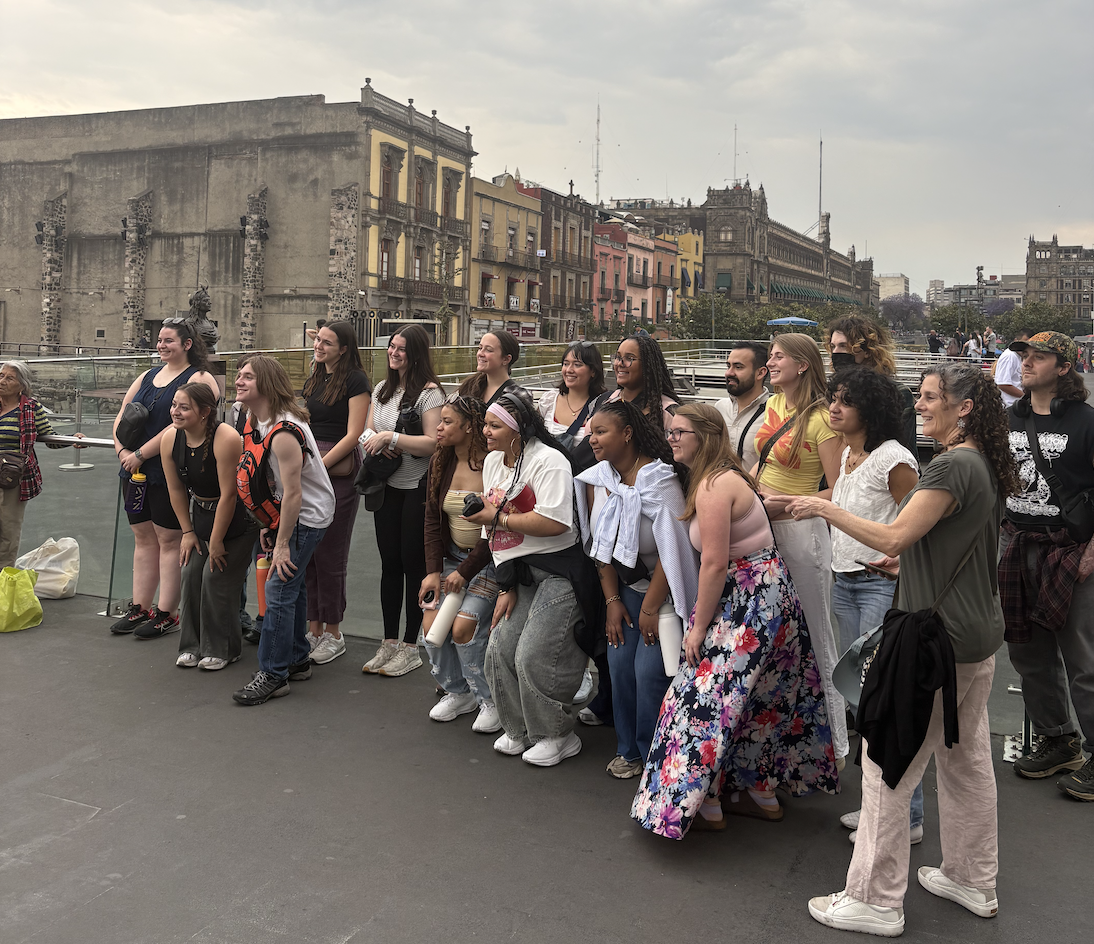
For business students, a study abroad program in Mexico can provide the required business focus with a rich cultural experience.
Mexico offers a chance to explore international trade, sustainable development, investment and entrepreneurship where these systems operate on a large, meaningful scale.
The real bonus is that the country is deeply connected to the U.S. economy through integrated supply chains, particularly in automotive, electronics and medical devices.
In 2024, more than 80% of Mexico’s goods exports went to the United States, according to the U.S. Trade Representative.
That makes Mexico an interesting classroom for students studying the international business environment.
Instead of discussing global supply chains only through case studies, students can investigate how production, transportation, suppliers, labor and trade policy interact in specific places and how all these can be done in a sustainable way.
Our Mexico destination programs can be shaped around any of your academic objectives rather than treating business learning as an add-on to sightseeing.
Summary
- Explore Mexico as a real-world classroom for business, economics and international relations.
- Examine how global supply chains connect Mexican production with international markets.
- Investigate nearshoring, manufacturing and the business decisions behind location and investment.
- Turn field experiences into academic evidence through structured research and reflection.
Why Mexico Works as a Business Study Abroad Destination
Mexico allows students to explore several sides of business at once: production, trade, foreign investment, labor, infrastructure and public policy.
For business students, that could mean investigating why a company chooses one location over another.
Economics students might examine regional development or productivity, while international relations students could explore how trade agreements influence cross-border dependence.
The geography also makes these questions tangible. A well-designed study abroad Mexico program can move between different perspectives instead of presenting the country as one single business environment.
For example, in our MBA Program Trips students have been able to connect with leading business professionals, entrepreneurs, and CEOs for inspirational keynote speeches that will enhance your students’ understanding of your subject matter.
This broader approach can complement an existing faculty-led study abroad program while keeping the academic focus firmly on course outcomes.
Study Trade With the United States Through the USMCA
The United States-Mexico-Canada Agreement (USMCA) provides another practical framework for understanding the international business environment.
Rather than asking students to memorize the agreement, faculty can use it to examine practical business decisions involving rules of origin, supplier choices, labor provisions and compliance costs.
This also opens the door to different perspectives. The same trade rule may have different implications for a large manufacturer, a smaller supplier, workers, consumers and governments.
For faculty developing student trips to Mexico, these questions can turn a policy topic into a field-based investigation, especially when combined with company information, trade data and industry reports.
Connect Entrepreneurship to the Wider Economy
A business program should not focus only on large companies. Mexican entrepreneurs and smaller businesses offer another way to understand how businesses create value, serve local markets and attempt a circular economy as their core business model.
This can be particularly useful when discussing the challenges that smaller enterprises face. The OECD identifies access to finance, skills, digital capabilities and participation in supply chains as important factors shaping SME growth.
Students could compare a local enterprise with an export-oriented manufacturer or examine how a smaller supplier manages growth constraints.
A logistics startup, cooperative or specialist manufacturer could provide a different perspective on the international business environment.
These conversations can also introduce topics such as social engagement, Community Service and responsible business practices without separating them from the broader economic picture, a trend many businesses nowadays need to follow.
Turn Visits Into Structured Academic Learning
The value of company visits during student trips to Mexico depends largely on what students do with the experience.
Before a visit, faculty can give students a small set of questions: Why is the organization based here? Where do its inputs come from? Who are its customers? What skills does it need? What operational risks does it face?
Whenever possible, different perspectives can also be combined. A manufacturer, smaller supplier, entrepreneur, academic or trade specialist may each describe the same business environment differently.
Faculty can also connect business learning with Mexican history, cultural history, Mayan heritage and sites such as Chichen Itza or other UNESCO sites, when these experiences support the program’s learning outcomes.
For example, learning Mayan designed one of the biggest more complex economies and trade networks in the ancient world.
Connect Field Experience to Assessment
Students should distinguish between what they directly observe, what a stakeholder reports, and what they infer from the evidence. This simple distinction encourages more careful analysis.
Assessment can also bring in trade-offs. Students might consider how investment and trade affect businesses, workers, smaller suppliers, communities and the environment rather than measuring outcomes only through economic growth.
For faculty, this makes study abroad in Mexico easier to connect with existing course objectives. The field becomes an extension of the classroom, with real organizations and locations providing evidence for academic analysis.
Final Thoughts
Mexico offers business students an opportunity to examine a connected manufacturing and trade economy through real locations, organizations and sustainable initiatives.
A thoughtfully designed study abroad Mexico program can bring together global supply chains, sustainable development, USMCA and entrepreneurship without losing sight of the people and communities involved in these systems.
Faculty considering Mexico study abroad opportunities can start by defining the learning outcomes, then discuss program length, suitable locations and potential experiences with our Kagumu Adventures team.
Frequently Asked Questions
Why is Mexico a good study abroad destination for business students?
Mexico gives students opportunities to examine manufacturing, trade, investment, supply chains and entrepreneurship in a real-world context. Its economic connections with the United States also make it relevant for courses in business, economics and international relations.
What can students learn about global supply chains in Mexico?
Students can examine how suppliers, manufacturers, transportation networks and export markets connect. Automotive production is one useful example because some parts can cross the U.S.–Mexico border multiple times before a vehicle is completed.
How can faculty turn company visits into assessable academic work?
Start with learning outcomes and prepare questions before the visit. Afterwards, students can produce a supply-chain map, market-entry brief, policy memo, location comparison or risk assessment using field observations alongside published evidence.


