
Travel insights from Latin America
Building Community Partnerships: The Secret Behind Impactful Educational Tourism
Author Simon Willis | September 8, 2026
After 10 years in the educational travel industry, we have seen one constant that always ensures a long-lasting impact.
While epic landscapes, fun walking tours, and interactive museum visits engage students with a new destination, the truly memorable moments always come from genuine interactions with local people.
And this is not easy to come by. It takes time. This is why we’ve built long-standing relationships with local communities, which help us connect visiting students with cultures, traditions, and ways of life very different from their own.
In this blog, I will give you insight into how we have developed relationships with communities from all over Latin America, as well as highlight the real impact on students who have traveled with us.
And I will give you tips on how to maximize these connections when you find yourself in another country on a student educational program.
Where it all started
The root of Kagumu’s commitment to supporting communities and promoting their cultural heritage started when I met Lucelly Torres, a prominent leader of the indigenous Arhuaco community.
As a travel writer covering Colombia, I had been tasked with covering the impact tourism was having on indigenous communities in the Santa Marta region on Colombia’s northern Caribbean coast.
In the end, the article didn’t get written. Instead, Kagumu was born.
After several meetings with Lucelly, I was fortunate enough to be invited to her sacred land of Nabusimake, a very bumpy 5-hour 4×4 ride from Valledupar in Colombia. Here I spent 4 days learning about how Lucelly and the other Arhuaco community members lived. How they found the sacredness and power not in a god but rather in the natural environment: the mountains, the ocean, the sun, the moon.
I was also invited to a meeting led by the Mamos – the indigenous leaders of the communities in this region of Colombia. During this often day-long event, community members spend hours talking about the impact we Westerners are having on their way of life, how our presence and ever-growing influence could potentially affect their culture and environment.
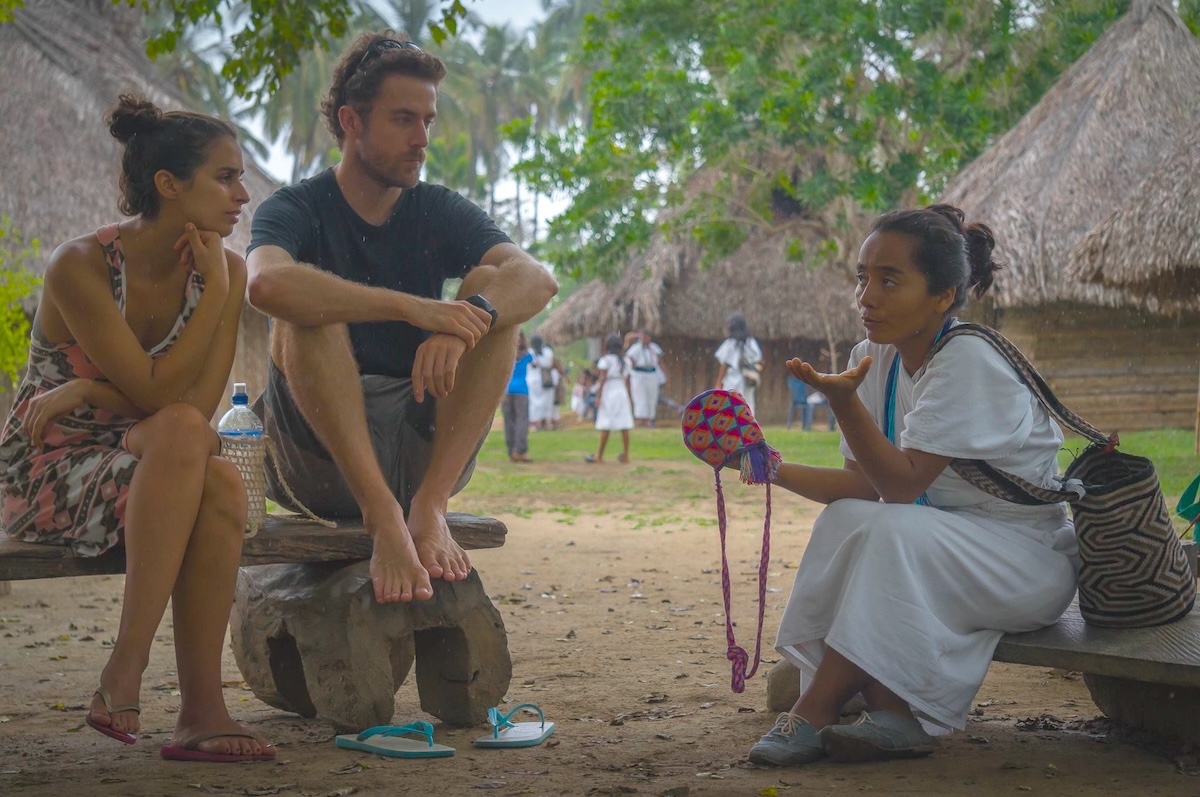
Lucelly talking to two of Simon’s friends on a test cultural immersion experience in the Arhuaco community.
After this enlightening experience, Lucelly invited me to visit her family in Don Diego on the Caribbean coast. We travelled to her cousin’s house and to the tourist-heavy Palomino. For anyone who has visited Palomino, it is a stark example of how tourism can wield positive and negative impacts on the environment and the communities living there.
There’s an obvious influx of tourist dollars helping the local economy flourish, yet the roads are dirty, the beaches are often over-visited, and more than anything, the sacredness of the indigenous communities is trivialised into blazing signs of “indigenous tours” turning it into an attraction rather than an invite-only privilege that it should be.
The whole experience with Lucelly left a lasting impact on me, and rather than a blog or newspaper article, I decided to start a travel company. A travel agency that focused on experiential learning and that was respectful and inclusive of communities, not just here but all around Colombia.
The idea was to have local communities and the environment at the forefront of any decisions we take. We’d decide where to take travelers depending on how it would impact the lives of people in communities. We’d also include the mission of teaching our clients the importance of engaging in more sustainable, ethical community travel in their future adventures.
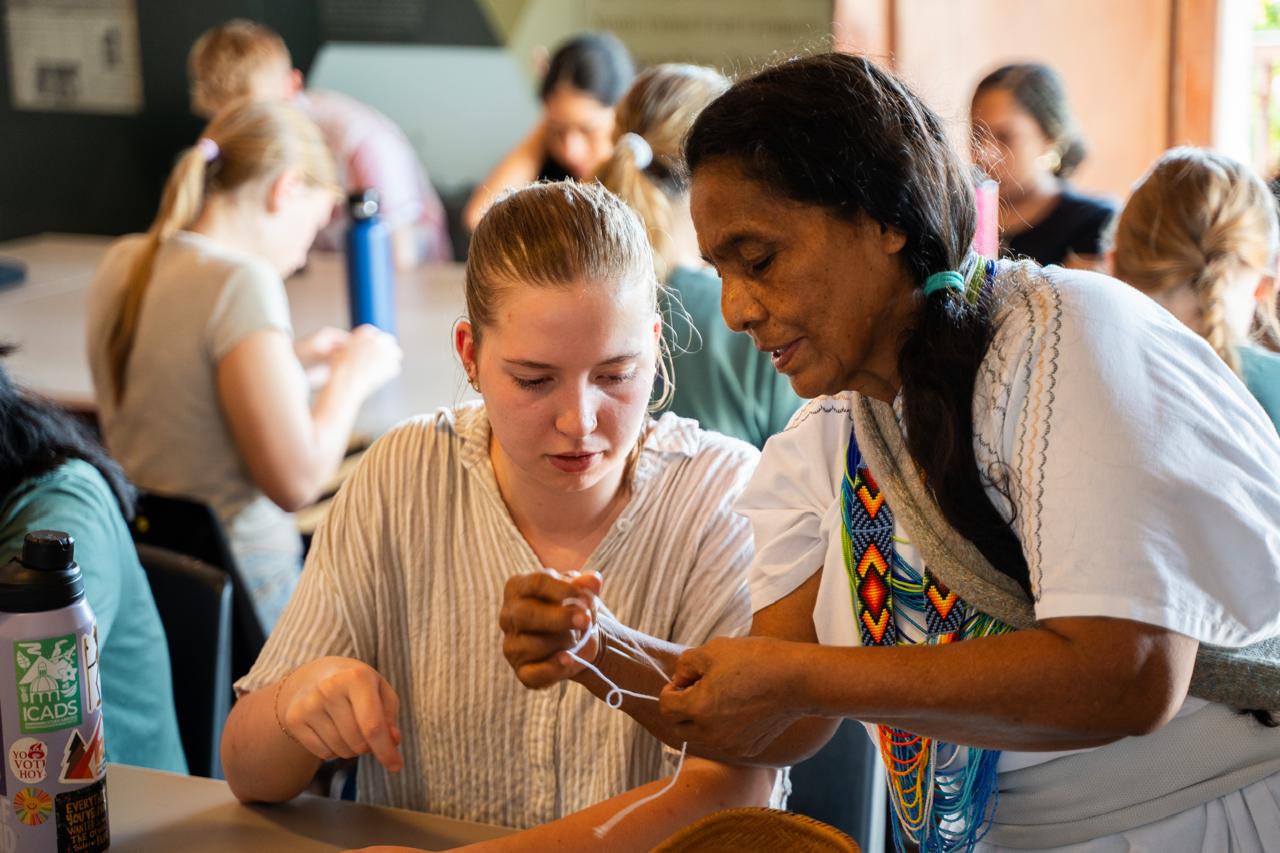
We continue to work with Lucelly and her community on school, college, and university visits, bag weaving workshops, and cross-cultural learning experiences, always co-creating any experiences rather than imposing what the tourist or we might want.
We are also proud to be one of the few companies in Colombia that run 100% of our Lost City treks with an indigenous community leader as the main guide. Gabo, who is himself aiming to be a Mamo one day, is part of the Wiwa community and leads our 4-day treks and day visits to Parque Tayrona.
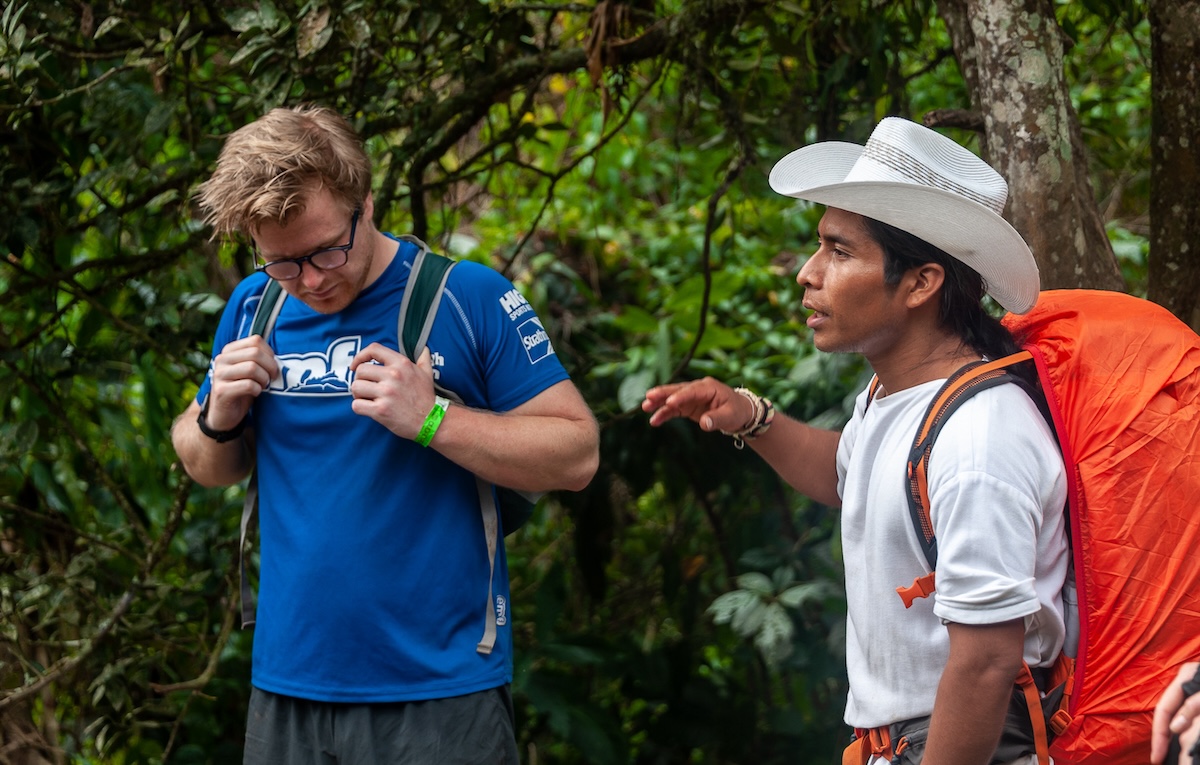
Gabo leading a Kagumu trek in the Lost City, Colombia
How Kagumu Adventures Approaches Community Partnership
This experience provided the starting point and blueprint to work with other indigenous communities around Latin America, from a homestay experience with a Quechua community in Peru to a Kichwa community immersion in Ecuador.
These connections have been built and maintained over many years, allowing us direct lines of communication with them to gauge the true impact of our visits, whether the community requires anything or whether we should cease visiting completely.
Indeed, last year we ran a country-wide community engagement survey in Colombia, reaching out to locals in 12 different regions to ask them how tourism was (and wasn’t) working for them.
The results gave us insight into possible changes to make to future trips. One change is a much more in-depth history and insight into the demographics of Colombia, including its ethnic breakdown. This gives students a much truer idea of the ethnic history of the country, helping them reduce any bias before visiting a community.
We also received a direct request from one of our partners in the community of Manrique in Medellin for funds to buy a stove for a local woman who owns a fish restaurant.
We are not afraid to make bold decisions too. After researching the impact of tourism on the area of Comuna 13 in Medellin, Colombia, we decided to stop all our visits. The decision also had a ripple effect with our international partners at both CAS Trips and Much Better Adventures.
Through regular community engagement, we continue to run a community-first methodology and have policies on working 100% with local guides for all our trips and study abroad programs.
The result is not just guaranteed local economic investment but also a unique friend-rather-than-visitor experience when student groups are travelling with us.
“It felt like every community we visited, they knew them personally. “Oh hey Ana, hey Dani, it’s good to see you!” And so when you walk into that space, you don’t feel like such an outsider because there is already that strong connection between the person in your group and the person you are going to visit.”
Julian Restrepo, University of Massachusetts, Boston Faculty, visited Colombia on a Sports Study Abroad Program in 2026
How to Prepare Students for Responsible Community Visits
Of course, we always aim to inspire and educate our students…even when they are not on a Kagumu program. Here are some tips on how to prepare your students for responsible community visits and cultural activities.
Preparation starts long before stepping onto a plane
When faculty and trip leaders invest time in setting expectations prior to departure, students shift from passive consumers of culture to thoughtful, respectful guests.
Deconstruct Preconceptions Early
Host pre-departure cultural immersion workshops that explore the history, ethnic diversity, and social dynamics of the region you are visiting. Giving students a clear picture of local reality helps dismantle stereotypes and reduces bias before they ever set foot in a community.
Frame Visits as an Honor, Not an Entitlement
Remind students that entering a traditional or indigenous space is an invite-only privilege. Encourage them to ask permission before taking photographs, listen more than they speak, and treat local practices with deep curiosity rather than casual judgment.
Co-create any Community Visits
If your program involves hands-on work, such as many of our Cultural Immersion Programs in Latin America, emphasize that students are there to work alongside local leaders, not to save them. The goal is solidarity, reciprocal learning, and supporting existing community efforts rather than imposing external solutions.
Build Daily Intentional Reflection
Set aside 20 to 30 minutes every evening for debriefs. Prompt students to consider: What assumptions did I hold today that were challenged? How did my presence impact the people I met?
To learn more about how we structure these experiences on the ground, explore our approach to Service Learning Trips and read about Our Impact across Latin America.
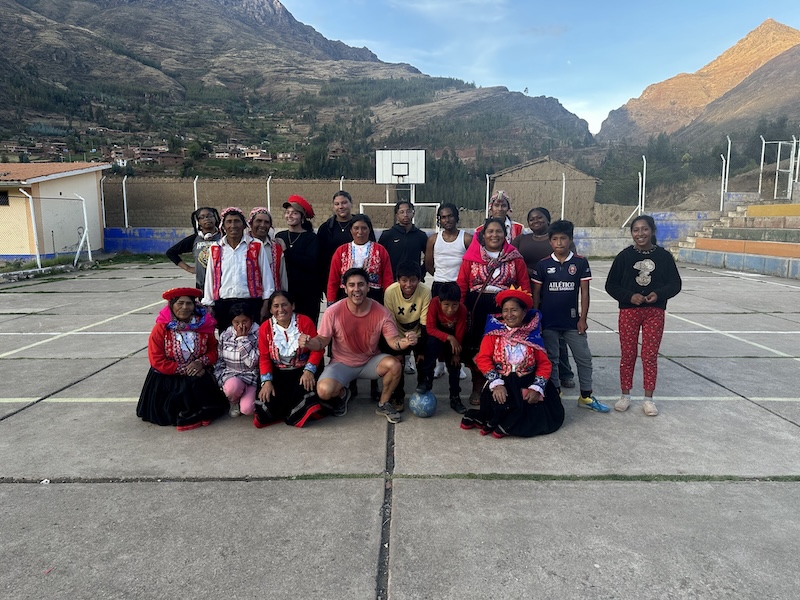
Lead guide Angel with our partners in the Cuyo Chico community in Peru
For more guidance on community visits and cultural immersion activties, check out the UN Tourism’s “Levegraging Tourism for Inclusive and Resiliant Rural Communities” pdf that highligs best practices in the indusry.
Questions Universities Should Ask Before Approving a Partnership with a Local Provider or Community
For university faculty and school leadership, choosing the right ground partner is the single most important decision in managing the ethics of a study abroad program.
Before signing off on a partnership, ask these essential questions to ensure your provider prioritizes local equity:
How are community partners compensated and involved in program design?
Look for providers that co-create educational travel itineraries directly with local leaders, paying them fairly as educators and experts rather than treating them as novel stops on a tour.
What is the provider’s policy on local hiring?
Ensure the operator employs (and pays a living wage) 100% local guides, drivers, and coordinators. This keeps educational investment circulating directly within the host economy.
Does the provider have a mechanism to evaluate local impact…and stop trips if necessary?
Ask if the organization actively gathers feedback from host communities. A truly responsible educational tour partner must be willing to alter or cancel visits if tourism pressure begins to harm the local dynamic.
How does the itinerary handle cultural and environmental integrity?
Verify whether activities respect local traditions, support ecological sustainability, and avoid extractive practices – like commodifying sacred sites or running invasive tours through vulnerable neighborhoods.
How are the locals treated by the guides and local educational tour company?
Do the guides know the locals? Does it seem like a friendly relationship or a forced one? The cultural immersion activity should include a thorough welcoming brief, respect throughout (with names being used to refer to the locals) and a big thank you or reflection celebration at the end.
Frequently Asked Questions
What distinguishes a genuine community partnership from educational tourism?
A genuine partnership is built on longevity, reciprocity, and shared decision-making. Standard educational tourism often drops groups into a community for a brief, transactional experience where the visitor benefits far more than the host.
Authentic partnerships mean the community actively shapes the experience, receives fair financial return, and retains the authority to say no or adjust terms at any time.
How should community partners influence the design of a study abroad program?
Community partners should lead the conversation on what knowledge is shared, how visits are structured, and what group sizes are manageable.
Rather than fitting local hosts into a fixed syllabus, faculty and providers should build academic outcomes around the lived realities and direct input of the community leaders hosting them.
What roles and preparation are appropriate for students in a short-term community-engaged program?
Students should participate as active listeners, co-learners, and supporters of existing local initiatives.
Appropriate preparation includes historical background reading, cultural orientation, ethics training on photography and consent, and clear guidelines on approaching local interactions with humility rather than a helper complex. Many of these aspects are covered in our unique sustainable traveler checklist.
How should universities recognize local time, knowledge, and resources?
Universities and providers must treat local hosts as guest lecturers and cultural experts.
This means providing fair, prompt financial compensation for their time and knowledge, respecting their schedules, and ensuring that community resources (like water, food, and space) are never strained to accommodate visiting groups.
I remember one instance when we had a school requesting to change the menu in a fishing village we were visiting. Our community manager, Ana Cristina, reminded the students that the fishing village community only had certain cooking implements to make typical food. It is up to the students to realize this and adapt accordingly.
How should universities measure value from the community partner’s perspective?
Value should be measured through direct community feedback rather than just student satisfaction surveys.
Universities should ask host communities: Did this visit respect your time and culture? Was the financial compensation fair? Do you want us to return? If the community does not see clear economic, social, or educational value from hosting, the program model must adapt.
Local communities will always play a central role in how we develop in the future, and it should be at the forefront of thinking for faculty and teachers wanting to offer a cultural immersion experience for their students.
If you’d like to learn more about Kagumu’s programs, you can drop us a line by following this link:


