
Travel insights from Latin America
Author Simon Willis | Published on July 28, 2026
Deciding whether a study abroad program would bring enhanced learning benefits for students studying STEM can seem quite daunting.
The time, cost, and uncertainty of whether the study program will actually deliver academically can all be roadblocks in going ahead or not with an international STEM program.
Here we explore the misconceptions about STEM study abroad programs and how you can embed international experiences into your STEM curriculum to not only enhance students’ learning while giving them real-life experience in the field, but also attract potential students to your major and increase their employability.
Unlike Spanish programs or History and Culture programs, there is an understanding that STEM majors are not conducive to study abroad.
This is in main due to rigid class schedules, lab requirements, contact time, and of course, students’ non-university commitments like jobs and taking care of family.
All this would point to students falling behind if they were to add in an international trip.
However, a well-designed STEM major can embed the indispensable study abroad experience within its curriculum, boosting future sign-up rates and giving students unique field research opportunities while boosting their career prospects.
Why Is STEM Study Abroad Hard to Fit Into a Degree Program?
Misconceptions of embedding STEM into a study abroad program
Let’s start with the misconception of why fitting a study abroad program into the schedule of a STEM curriculum seems impossible.
Faculty might point to unavoidable barriers like a fixed academic schedule, specific dates for assessments, research projects, exams, classroom-based modules, et al.
Students also often need to be on campus, especially when conducting research projects that include group work or contact hours with faculty.
Why Does Treating Study Abroad as an Extra Cause Problems?
Treating a study abroad experience as an added extra inevitably causes a conflict.
If the experience abroad overlaps, or at worst, conflicts with anything in the course, then it’s not surprising to see students opt out.
No student would choose a study abroad experience if it were to delay graduation, add credits that do not advance their major, or compete with any degree requirements like lab work or contact hours with faculty.
The key is to embed the study abroad experience within the curriculum, allowing the inevitable advantages of international fieldwork to come to the fore.
Move from an experience that would beg the question: ‘Where can students find spare time?’ to one which would induce a query of: ‘Which existing outcome can be taught particularly well in an international setting?’
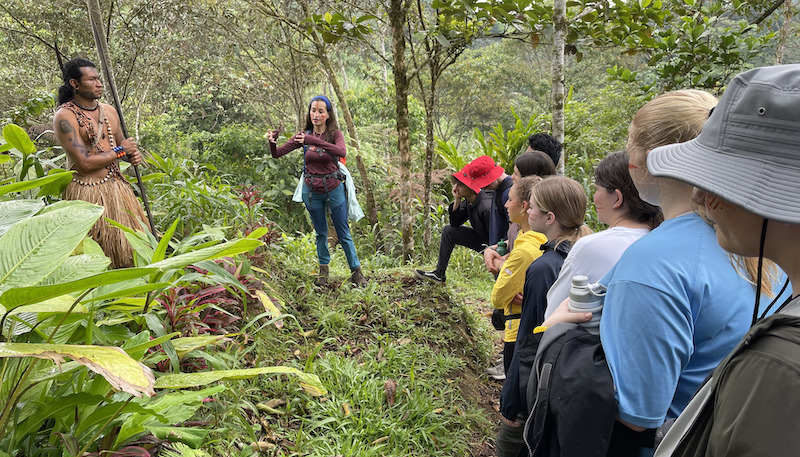
STEM students learning about native forests in Ecuador
Start With the Degree Map, Not the Destination
Which Requirements Are Genuinely Fixed?
Of course, the key to including the study abroad experience within the curriculum depends on planning and collaboration from several departments.
Passionate faculty, whose vision includes building field research into their major, should collaborate with the study abroad office or international study advisors to ensure learning outcomes are embedded within any program.
As a starting point, it’s good practice to advise the international department to separate non-negotiable constraints from conventions that could be changed through an approved substitution, an embedded travel component, or a revised assessment method.
Where Are the Realistic Mobility Windows?
Choosing the right window for the least interruption is key.
The good news is that study abroad experiences that include vital field research can be run year-round at a place of your choosing and for as long as you wish.
Look for summer and winter breaks, spring break, the period immediately after final assessments, reading weeks, flexible elective blocks, research terms, and capstone preparation periods.
Aligning the field research to the study focus is key, as is advising the study abroad department to publish a clear pathway by major and year of study so students can plan early instead of discovering the opportunity after their timetable is fixed.
Which Study Abroad Formats Work for Busy STEM Degrees?
Short-Term Faculty-Led Programs
Short-term faculty-led programs generally last from 1 to 4 weeks and are, as it alludes to, led by the faculty of the major.
To increase the enrolment rate, we recommend keeping this study abroad program open to students of all majors, and even other university campuses.
The advantage of a program led by the faculty is that they can define the exact leading cohort and can remain in direct control over assessment to reduce uncertainty around course equivalency.
To ensure program success, we recommend planning intensive field methods, site-based engineering analysis, biodiversity surveys, environmental monitoring, data collection, or meetings with local scientists and innovators as academically credible uses of limited time.
For example in the Galapagos STEM students can work directly with the National Park as it looks to reforest degraded land and control invasive species to protect the fragile biodiversity.
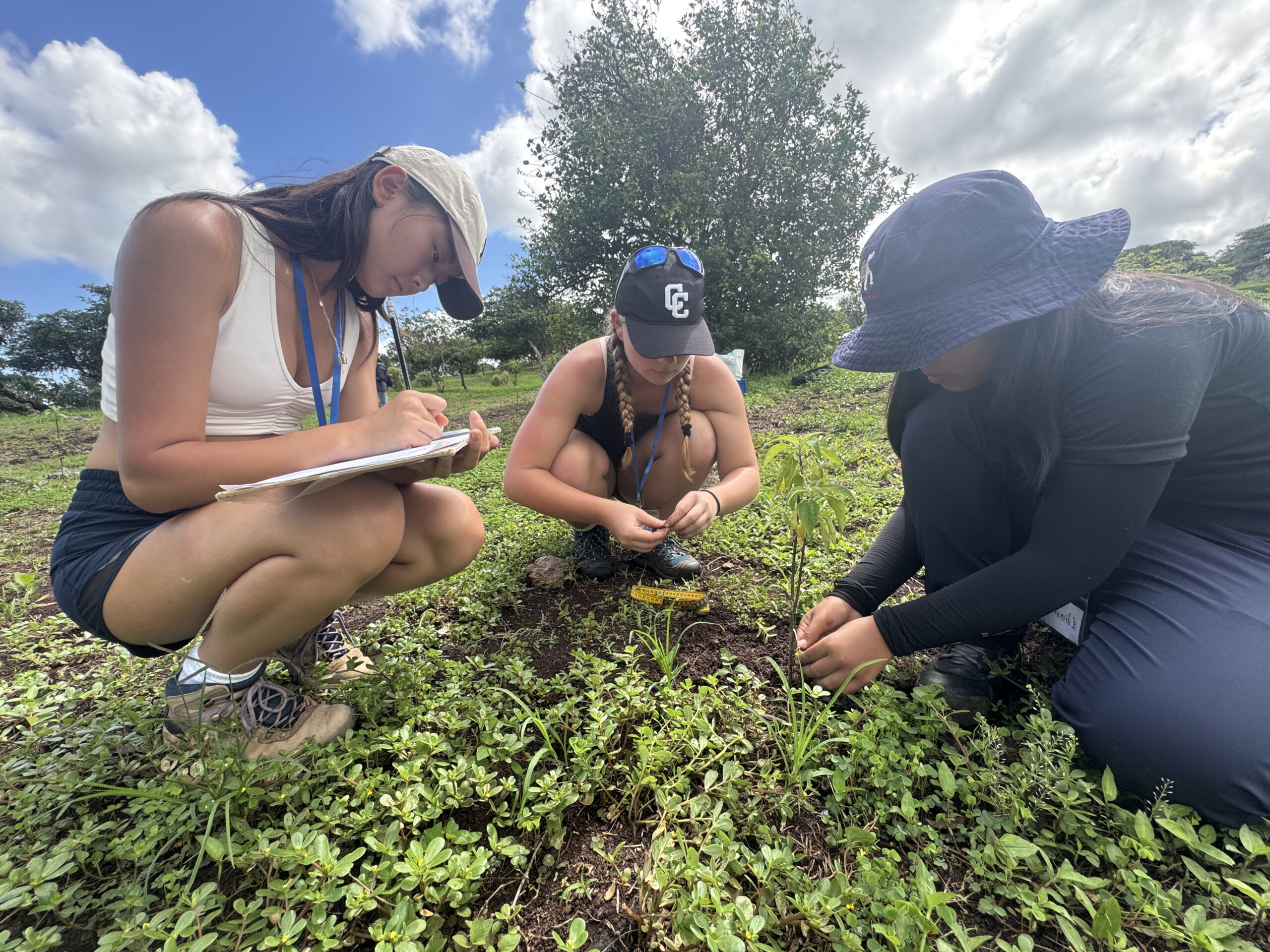
STEM Students recording native plant species in the Galapagos
Summer, Winter and Embedded Course Models
Another option would be to offer a summer or winter study abroad option that is embedded into the course modules.
This option takes place outside of university term time and would require much more organization on the part of students. The key here would be to offer a variety of options ranging from internships, paid work, and summer/ winter study abroad courses with third-party providers.
One way to manage the success and educational impact of this international experience would be to embed research work into this and have students complete a report or assessment upon return.
Research, Fieldwork, Internships and Capstones
As alluded to above, an international experience can involve a much work-heavier or research-focused element, and offering internships or fieldwork with an organization could be the way to go.
We recommend working with a third-party provider (like World Internships in Colombia) to identify and select internship opportunities or reaching out to organizations directly and seeking long-term collaboration.
This can often be the most affordable option for students as work is often paid or at least food and board is covered. There is also the added incentive of boosting a resume with actual field work with an organization or even a foot in the door to join an international company.
How Should Departments Protect Academic Progression?
Agree Credit Before Buying a Flight
If you want to stop students panicking about falling behind, sort the administrative paperwork out long before you start handing out flyers.
Put together a clear, written agreement. Spell out the exact campus module or graduation requirement the trip fulfills, the credit value, what’s expected in terms of field hours versus independent study, how grading works, who assesses the work, and what happens if local conditions force a change of plan on the ground.
If foreign transfer credits are involved, lock down articulation agreements before a student spends a single dollar.
San Diego State University set a great precedent here and even won a NAFSA Comprehensive Award for pre-approving overseas coursework so students in tight, lockstep majors could head abroad without pushing back their graduation date.
One of the major reasons for the success of SDSU is the collaboration between faculty members and the international affairs office.
When trying to increase student participation in study abroad programs, they also recommend shifting focus from a destination-led approach to keeping focused on the major. This would include “assigning international affairs advisers to specific colleges rather than to countries or regions of the world.”
Map the Program to Learning Outcomes
Trying to match an overseas trip to a traditional syllabus lecture-for-lecture is a recipe for a headache.
Instead, focus on what the location actually allows students to do that they couldn’t do back home.
Faculty should design programs around core competencies that only international experiences can generate. These include:
- Applying the scientific method when conditions are messy or unpredictable.
- Evaluating local engineering quirks within specific environmental or cultural systems.
- Making sense of raw field data without the comfort of a climate-controlled campus lab.
- Communicating technical ideas across language barriers and cultural divides.
Once those goals are set, create an assessment plan that yields tangible evidence of learning.
We recommend requesting students present field notebooks, primary datasets, technical memos, design reviews, oral presentations, or a capstone project.
To offer credit, each department must independently verify its own institutional, professional, and program accreditation obligations.
We love ABET – a great benchmark for engineering and applied sciences- but there’s a common myth that ABET simply “approves” or “rejects” study abroad courses. They don’t.
Accreditors look at whether your home institution can prove students met the required outcomes through the course. The responsibility for outcome-mapping always sits back on campus.
It’s always important to remember: the burden of proof remains with the university’s own outcome-mapping process.
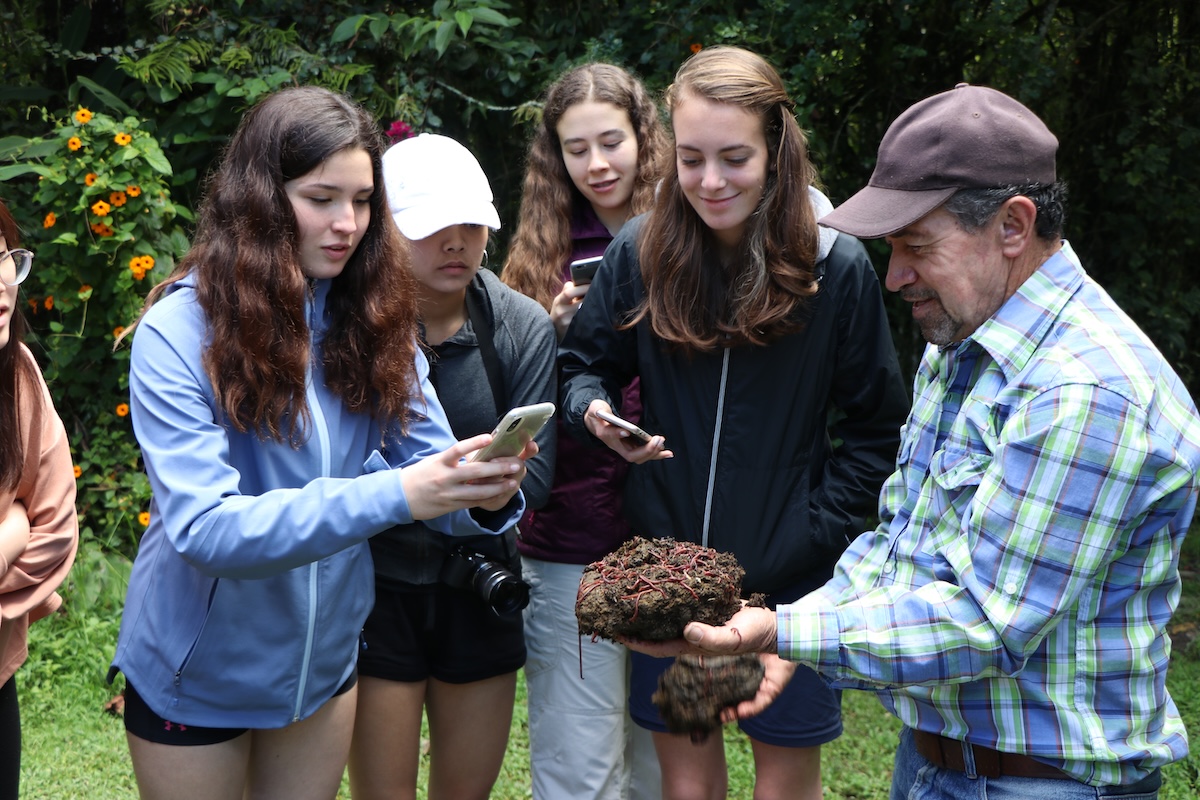
STEM students learning about sustainable farming in Colombia
How Can a Short Program Still Be Academically Rigorous?
You might have heard, especially from curriculum committees, that short-term programs lack depth and are therefore not worth it.
In reality, academic rigor isn’t measured in weeks on a calendar; it’s about smart design, real challenge, and proper feedback.
A super-focused, two-week field trip often sparks far more genuine learning than a passive semester sat in a foreign lecture hall during which much of the term can get swallowed up by social distractions anyway.
To make a short program work, frame it in three clear stages:
- Pre-Departure: Students get to grips with foundational theory, field methods, and local context on campus before setting foot on a plane.
- On-Site Investigation: Time on the ground is spent doing real work—field observations, data collection, and direct engagement with local projects or ecosystems.
- Post-Return Analysis: Back on campus, students process their findings, link their data back to the core curriculum, and finish their final deliverables.
To maintain high standards, resist the temptation to pack the itinerary with endless sightseeing (but don’t neglect it completely!)
Keep the core learning outcomes tight so students actually have time for deep observation, data checks, and faculty feedback rather than rushing from site to site.
When building these frameworks, we recommend taking a look at The Forum on Education Abroad: Standards of Good Practice.
Using their quality framework keeps your academic setup, safety protocols, and community ethics solid, turning a short trip into a genuinely high-impact piece of a four-year degree.
How Can STEM Students Benefit Beyond Learning Outcomes?
The technical metrics matter, of course, but the real magic of field travel is how it turns students into capable, self-reliant professionals.
Navigating a new environment pushes them out of their comfort zones, forcing them to make decisions, solve unexpected problems, and operate without a predictable daily script.
In the field, plans change. Weather rolls in, mechanical systems break down, or data comes back messy.
Managing that ambiguity teaches STEM students to stay analytical when there isn’t a neat answer at the back of a textbook.
That said, don’t assume this growth happens automatically just because you bought a plane ticket.
It takes faculty guidance and structured reflection to help students process what they’ve experienced. (And having a solid on-ground partner like Kagumu Adventures to handle the logistical heavy lifting takes a huge chunk of that burden off faculty shoulders!)
Strengthening Communication, Teamwork, and Career Readiness
Modern employers don’t want isolated scientists. A lot of companies nowadays want people who can solve problems in real-world, global teams.
Working alongside international peers, local experts, inspirational local project leaders, research scientists, and indigenous communities forces students to listen carefully, explain technical ideas simply, and collaborate with people who see the world differently.
Fieldwork is brilliant for bringing out leadership. Whether it’s sharing equipment maintenance, sorting out a disagreement over data, or stepping up when travel plans shift, students learn how teams actually function under pressure.
According to the landmark study Gaining an Employment Edge by the Institute of International Education (IIE), alumni of study abroad programs report significant, career-defining gains in communication, interpersonal skills, flexibility, adaptability, and intercultural competence.
Meanwhile, a joint research report published by IIE highlights that international field placements and internships drive the highest growth precisely in these intrapersonal and interpersonal workforce competencies.
What Does a Workable STEM Study Abroad Design Process Look Like?
Designing an embedded international program requires a timeline that respects university governance, partner logistics, and student financial planning.
In essence, planning is key, and give yourself plenty of time!
12–18 Months Before Departure: Establish the academic framework before committing resources.
- Agree on the degree requirement, module lead, learning outcomes, format, and travel window.
- Set up a small working group with faculty, academic advisers, and your department chair.
- Talk to your study abroad office and start exploring local delivery partners on the ground.
- Stress-test the concept against reality: costs, eligibility, faculty workload, safety, equipment, visas, and local seasonal weather.
6–12 Months Before Departure: Lock in institutional pathways and concrete syllabus details.
- Get final curriculum committee and credit approvals sorted.
- Finalize assessment plans and sign partner agreements.
- Brief academic advisers so they can explain to students exactly how the trip fits into their degree progression.
- Work closely with host partners to map out what local experts will teach and how site visits directly connect back to your syllabus.
Before, During, and After Travel: Protect the academic integrity of the active field experience.
- Before: Run pre-departure sessions covering technical prep and local cultural context.
- During: Protect time on site for actual field research, data collection, and regular faculty catch-ups.
- After: Finish data analysis, grade final work, and share outcomes back with the host community so they benefit from the data gathered.
Frequently asked questions:
How long is a study abroad program?
Traditional programs last 4 to 10 months, which often disrupts strict STEM tracking. To fix this, short-term faculty-led or embedded models compress travel into highly focused windows of 1 to 4 weeks during summer, winter, or spring breaks, preventing any graduation delays.
Why is studying abroad for STEM majors beneficial?
It exposes students to diverse scientific methodologies, unique ecosystems, and regional engineering challenges that cannot be replicated on campus. Experiencing international infrastructure, localized climate impacts, or raw field research transforms passive classroom theory into active problem-solving.
Why study abroad as a STEM major?
It builds the exact soft skills modern technical employers demand. Navigating unfamiliar field environments directly strengthens cross-cultural communication, adaptability, distributed teamwork, and independent decision-making in ambiguous situations, giving graduates a distinct competitive edge.
How Can Kagumu Support Faculty-Led STEM Study Abroad?
Once your department has defined its core academic purpose and identified the ideal curriculum mobility window, Kagumu Adventures steps in as your dedicated experiential delivery partner.
We specialize in translating abstract course learning outcomes into highly customized, logistically seamless international itineraries.
Our team handles the heavy lifting on the ground, identifying relevant local scientists, engineering projects, and community innovators, while managing complex local transport, safety protocols, and field logistics.
Our work and assistance allow university faculty to focus entirely on teaching, mentoring, and academic oversight, while the home institution retains full, uncompromised responsibility for student credit, grading assessments, and programmatic accreditation decisions.
Get in touch here to begin designing your faculty-led program


