
Travel insights from Latin America
Mexico City vs Oaxaca: Which Study Abroad Destination Best Fits Your Curriculum?
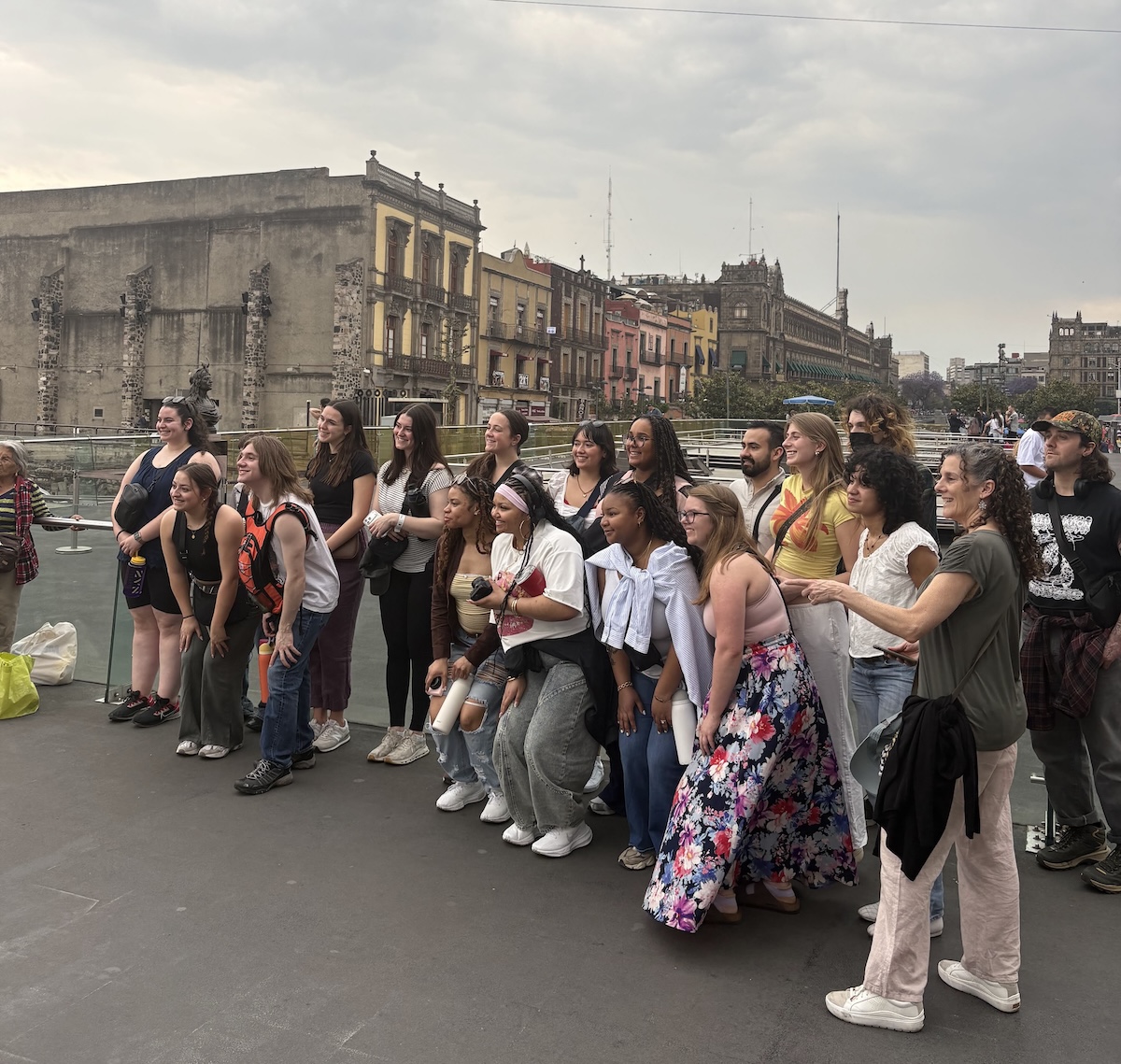
Author Juan Felipe Jimenez | Published on November 19, 2026
Two of Mexico’s most famous cities, Mexico City and Oaxaca, offer completely different experiences for students visiting on a study abroad. From national institutions and complex urban systems to regional heritage and community-based learning, the right choice depends on what your students need to learn, the people they should meet, and how much time you have for fieldwork.
Here’s how to decide which destination best fits your curriculum.
The Difference at a Glance
As the country´s capital, Mexico City provides opportunities to investigate politics, business, architecture, public policy, and urban development within a major metropolitan environment.
Oaxaca offers a different perspective. Its regional history, Indigenous heritage, food systems, and archaeological sites create opportunities to explore anthropology, cultural studies, sustainability, and Spanish language learning.
| Consideration | Mexico City | Oaxaca |
| Strong academic fit | Politics, business, urban studies, architecture, modern history | Anthropology, archaeology, Indigenous studies, food systems, Spanish |
| Learning environment | Large, complex metropolitan setting | Smaller regional center |
| Field-learning potential | Institutions, museums, organizations, urban infrastructure | Archaeological heritage, regional food systems, cultural practices |
| Main planning consideration | Travel time across the city and a busy urban environment | Coordinating appropriate local expertise and field activities |
Neither destination guarantees a stronger learning experience. The value comes from how well the itinerary connects each activity to your course objectives.
When Mexico City Is the Stronger Academic Fit
For a course examining how societies, institutions, and economies function at scale, Mexico City offers a particularly useful setting. The city is enormous, with the 2020 census estimating a population of approximately 9.2 million residents, while its wider metropolitan area was home to around 21.8 million people.
As Mexico’s capital and a major economic and political hub in Latin America, it brings together national decision-making, business activity, cultural institutions, and the everyday challenges of a large metropolitan area.
Politics and international relations: Students can investigate how national institutions, public policy, and political history shape contemporary Mexico. For example, a course could examine the role of the federal government through Mexico City’s historic civic center, including the National Palace and the surrounding Zócalo.
With appropriate arrangements, an institutional visit or expert-led discussion could help students connect political structures with current public debates.
Business and urban studies: The capital’s metropolitan environment offers opportunities to examine commerce, infrastructure, urban development, and the relationship between economic growth and quality of life.
A practical example would be comparing the historic commercial streets of the Centro Histórico with the corporate and financial landscape of Santa Fe. Students could use these contrasting areas to discuss how investment, transport connections, and urban planning shape the city’s economic geography.
Architecture, art, and history: The city’s built environment brings different historical periods into conversation. UNESCO’s documentation of the Historic Centre of Mexico City and Xochimilco explains how the area reflects both the Aztec capital of Tenochtitlan and subsequent colonial development.
For faculty considering Mexico City study abroad, the key advantage is the range of perspectives available within one metropolitan area. However, that breadth requires careful scheduling. Travel between activities can consume valuable time, so grouping visits geographically and allowing time for reflection are essential.
When Oaxaca Is the Stronger Academic Fit
Oaxaca offers a different learning environment from Mexico City. It is much smaller, with the 2020 census approximating 271,000 residents in its capital, Oaxaca de Juárez, making the lively city much easier to explore on foot.
This distinction goes beyond size, as learning opportunities extend into regions with different landscapes, economies, languages, and cultural identities. Zapotec and Mixtec histories are particularly important to the region, alongside many other Indigenous communities and contemporary ways of life.
Oaxaca is particularly relevant when your course benefits from examining regional histories, cultural practices, language, and relationships between communities and their environments.
Anthropology and Indigenous studies: Oaxaca’s cultural and linguistic diversity offers opportunities to examine how communities maintain, adapt, and reinterpret cultural practices in contemporary life.
For example, students could investigate the role of Zapotec and Mixtec languages in local identity, education, or community life, or explore how collective practices such as tequio, community work organized for shared benefit, operate in particular contexts. These subjects are best approached through conversations and activities developed with local researchers or community partners, rather than treating communities as static examples of tradition.
Archaeology and heritage: The UNESCO World Heritage site encompassing Oaxaca’s historic center and Monte Albán connects colonial urban planning with an archaeological landscape shaped by successive peoples, including the Zapotecs and Mixtecs.
Students can examine how archaeological evidence informs interpretations of the past, while considering how heritage is preserved, interpreted, and managed today.
Food systems and sustainability: Oaxaca’s agricultural diversity provides a concrete starting point for studying the relationship between food, livelihoods, and environmental resources. One example is the milpa, a traditional agricultural system that commonly combines maize, beans, and squash, alongside other locally relevant crops.
Research in Oaxaca’s Sierra Mixe region has examined how different milpa systems contribute to agrobiodiversity and household food security. Students could use this as a case study to explore crop diversity, traditional knowledge, food sovereignty, and the pressures affecting small-scale agriculture. A discussion with local producers or food practitioners, if appropriately arranged, could help connect these themes to current realities.
Oaxaca can also support Spanish learning through everyday interactions, guided activities, and appropriately arranged opportunities to practice with local speakers. Its smaller urban scale may make repeated observation and continuity between activities easier to organize. However, meaningful community-based learning still depends on the itinerary, transport arrangements, and relationships with local partners.
Compare the Learning Environment, Not Just the Subject List
Academic relevance is only one part of the decision. Your students’ needs and the practical demands of the program also matter.
Consider the following questions:
- Group confidence: Will students feel comfortable navigating a busy metropolitan environment, or would a smaller setting better support their first experience abroad?
- Language skills: Do students need structured Spanish instruction, guided conversations, or opportunities to practice independently?
- Accessibility and sensory needs: Have you assessed walking distances, noise, mobility requirements, rest opportunities, and the pace of each day?
- Fieldwork and reflection: Does the itinerary allow students to revisit a question, compare evidence, and discuss what they have learned?
- Logistics and budget: How much time and money will transportation, accommodation, and specialist activities require?
Kagumu’s approach to faculty-led study abroad begins with academic alignment, helping faculty develop experiential learning around their syllabus rather than fitting a course into a fixed itinerary.
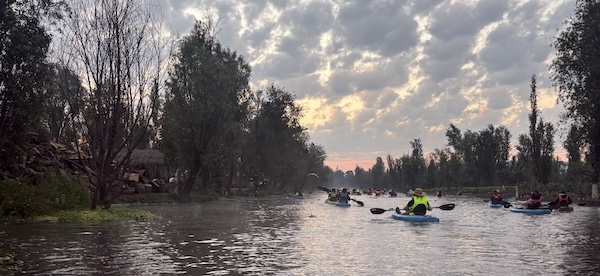
Students on a kayaking activity in Mexico City
Should a Program Include Both Destinations?
Combining Mexico City and Oaxaca can work when comparing national and regional perspectives is central to the course.
For instance, students studying cultural policy might investigate national approaches to heritage before examining how archaeological sites and historic places are managed regionally. A course on sustainable development could compare metropolitan challenges with regional food systems and livelihoods.
However, adding a second destination also means another transfer, additional costs, and less time for teaching and reflection.
For a short program, choosing one location may produce stronger results. If students need to develop a research question, gather evidence, and present their findings, depth is often more valuable than covering two destinations.
Explore Kagumu’s Mexico educational trips to consider how the destination could support your intended learning outcomes.
A Curriculum-Led Decision Checklist
Before choosing, work through these questions with your faculty team:
- Learning outcomes: What should students be able to explain, evaluate, or demonstrate after the program?
- Field access: Which institutions, specialists, sites, or local practitioners can help them achieve those outcomes?
- Student needs: What language levels, accessibility requirements, and levels of travel experience should you accommodate?
- Time and budget: How much teaching time remains after transportation, accommodation, and other logistics?
- Assessment: What evidence will students collect, and how will you evaluate their learning?
- Local expertise: Can the program be developed with knowledgeable local partners and respectful community engagement?
Your answers should make the choice clearer. If students need to compare national institutions and urban systems, Mexico City may be the stronger fit. If they need sustained engagement with regional heritage, archaeology, language, or food systems, Oaxaca may be more suitable.
Final Thoughts
Mexico City and Oaxaca offer different academic possibilities, and neither is automatically the better study abroad destination. The strongest choice is the one that makes your intended learning achievable within the time, budget, and student needs you have to work with.
At Kagumu, we work with faculty to develop educational travel experiences around specific academic goals, local expertise, and practical requirements. If you’re considering Mexico for your next university program, contact Kagumu Adventures for a personalized itinerary built around your curriculum.
Frequently Asked Questions
Is Mexico City or Oaxaca better for study abroad?
It depends on the course. Mexico City is particularly relevant to politics, business, urban studies, and modern history. Oaxaca may be a stronger fit for anthropology, archaeology, Indigenous studies, regional food systems, and Spanish learning.
What subjects are best suited to study abroad in Mexico City?
Politics, international relations, business, architecture, art, urban studies, and modern Mexican history can benefit from the capital’s institutions, museums, and metropolitan environment.
What subjects are best suited to study abroad in Oaxaca?
Anthropology, archaeology, cultural studies, Indigenous studies, Spanish, food systems, and sustainability are potential fits, depending on the available field activities and local expertise.
Can a short study abroad program include both destinations?
Yes, when comparing the two settings directly supports the course objectives. Faculty should weigh the additional transfer costs and travel time against the academic value of visiting both.
How should faculty choose a study abroad destination in Mexico?
Start with the learning outcomes, then identify the people, places, and field activities students need. Assess accessibility, language expectations, budget, and available teaching time before finalizing the itinerary.


