Travel insights from Latin America
How Universities Can Build a Conservation-Focused Study Abroad Program in Costa Rica
Author Juan Felipe Jimenez | Published on September 14, 2026
Classroom lessons provide the ideal environment for explaining how complex ecosystems and conservation work.
To truly understand the theory, however, students must experience real-world settings, be guided by local experts and conservationists, and be catapulted out of their comfort zone.
That is one of the biggest opportunities for educational institutes thinking of a conservation-focused study abroad program in Costa Rica.
Costa Rica gives students access to remarkably varied environments, from cloud forests and tropical ecosystems to coastal landscapes. But the destination alone does not make a program academically valuable.
A strong program starts with a question: what do you want students to learn while they are there?
This changes the way an itinerary is built. Instead of choosing activities first and finding an academic connection afterwards, faculty can work backwards from their learning outcomes and select experiences that help students explore them.
For example, a conservation-focused program might combine wildlife rehabilitation with questions about animal welfare and human intervention, or use a forestry experience to examine reforestation, habitat protection, and the challenges of achieving long-term environmental impact.
Kagumu’s recent Costa Rica programs use this kind of combination, bringing students to a local wildlife rescue center, a forestry workshop in La Fortuna, and an Indigenous community while also building in time to reflect on what they have experienced.
The important part is that these experiences are not treated as isolated attractions but become opportunities to ask better questions.
Build the Program Around Learning
Before choosing a site, guide, or conservation project, define what students should know, understand, or be able to do by the end of the program.
This could mean analyzing an ecosystem with an environmental science focus, examining conservation policy through a geography or public policy lens, or understanding the relationship between communities and environmental protection in sustainability programs.
Then decide what students actually need to do in the field.
There is a big difference between observing wildlife, participating in a restoration activity, or collecting data for research. Each requires different preparation, supervision, and expectations.
The same applies to assessment. A field journal, research report, policy brief, or presentation can turn a few hours outside the classroom into meaningful academic work. That is why a study abroad program can be so meaningful and a great idea to include in your faculty’s study plan.
Choose the Right Conservation Experience for Your Course
Once the learning outcomes are clear, the next question is what students should actually experience.
Costa Rica offers plenty of possibilities, but a good program does not need to fit every one of them into a single itinerary. The strongest experiences are the ones that give students a practical way to investigate the questions already present in their course.
Let’s have a look at some conservation initiatives your students can experience.
Let Students Study Ecosystems in the Field
Think about how a rainforest hike can be much more than a chance to spot wildlife.
With the right guidance, students can use a forest, wetland, cloud forest, or coastal environment to observe species and habitats, record field notes, or carry out simple supervised assessments.
Connecting those observations to the learning goal is what sets your program apart. Make your students ask themselves: What happens when habitats become fragmented? How does an ecosystem respond to environmental pressure? What services does it provide to surrounding communities?
Kagumu’s Costa Rica programs, for example, have used rainforest and cloud forest environments to connect field observations with topics including biodiversity, habitat fragmentation, and climate change.
Wildlife Rescue in Details
A visit to a rehabilitation center can open discussions about animal welfare, human intervention, habitat loss, and what it actually takes to return an animal to the wild.
That distinction matters. Seeing an animal is not the same as contributing to conservation.
Students should understand the role and limitations of rescue and rehabilitation, while any interaction with wildlife should follow appropriate welfare standards. Their role might be observation, discussion, or learning from conservation professionals rather than direct contact with animals.
For instance, Kagumu’s current Costa Rica itinerary includes a rescue center working to reintegrate monkeys, sloths, parrots, and iguanas into their natural ecosystem. This experience has taught students how important it is to be fully aware of how to interact with wildlife with respect.
Go Beyond Planting a Tree
Tree planting makes for a great photo. Conservation education needs to go deeper.
Students can use reforestation to explore questions about native species, habitat connectivity, site selection, and what happens after the planting day is over.
A few hours of student participation cannot replace years of restoration work. Any activity should therefore form part of a locally managed project with a longer-term plan for maintenance and monitoring.
Kagumu’s Costa Rica programs currently include a forestry workshop in La Fortuna connected to reforestation and efforts to protect the local sloth population.
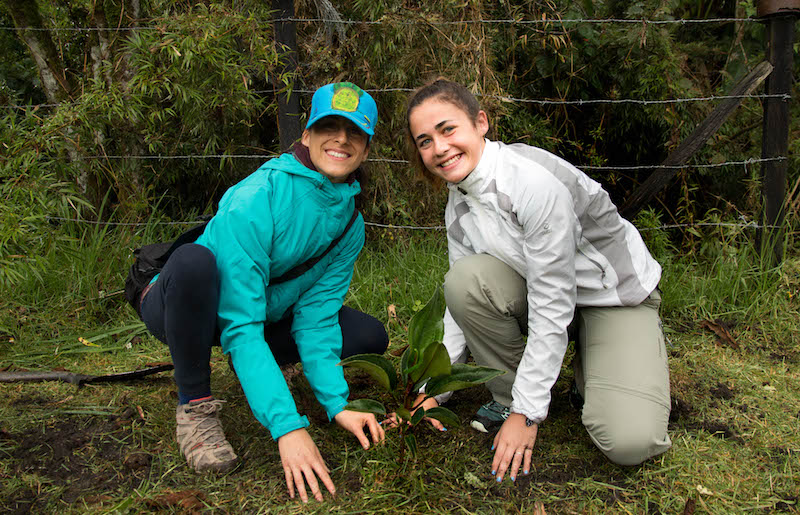
Tree planting is always followed by an expert-led reflection
Put People at the Heart of Conservation
Conservation is not only about forests and wildlife. It is also about the people who live, work, and make decisions within those landscapes.
Agriculture, tourism, land use and local livelihoods can all influence whether conservation efforts succeed. Bringing community perspectives into the program helps students understand those relationships rather than viewing environmental protection as a purely scientific problem.
For example, Kagumu’s Costa Rica programs include time with the Maleku Indigenous community, giving students an opportunity to explore different relationships with land and the natural environment.
For faculty, this creates an important opportunity: students can learn that conservation rarely has a single solution, and that effective environmental work needs to consider ecological, cultural, and economic realities at the same time.
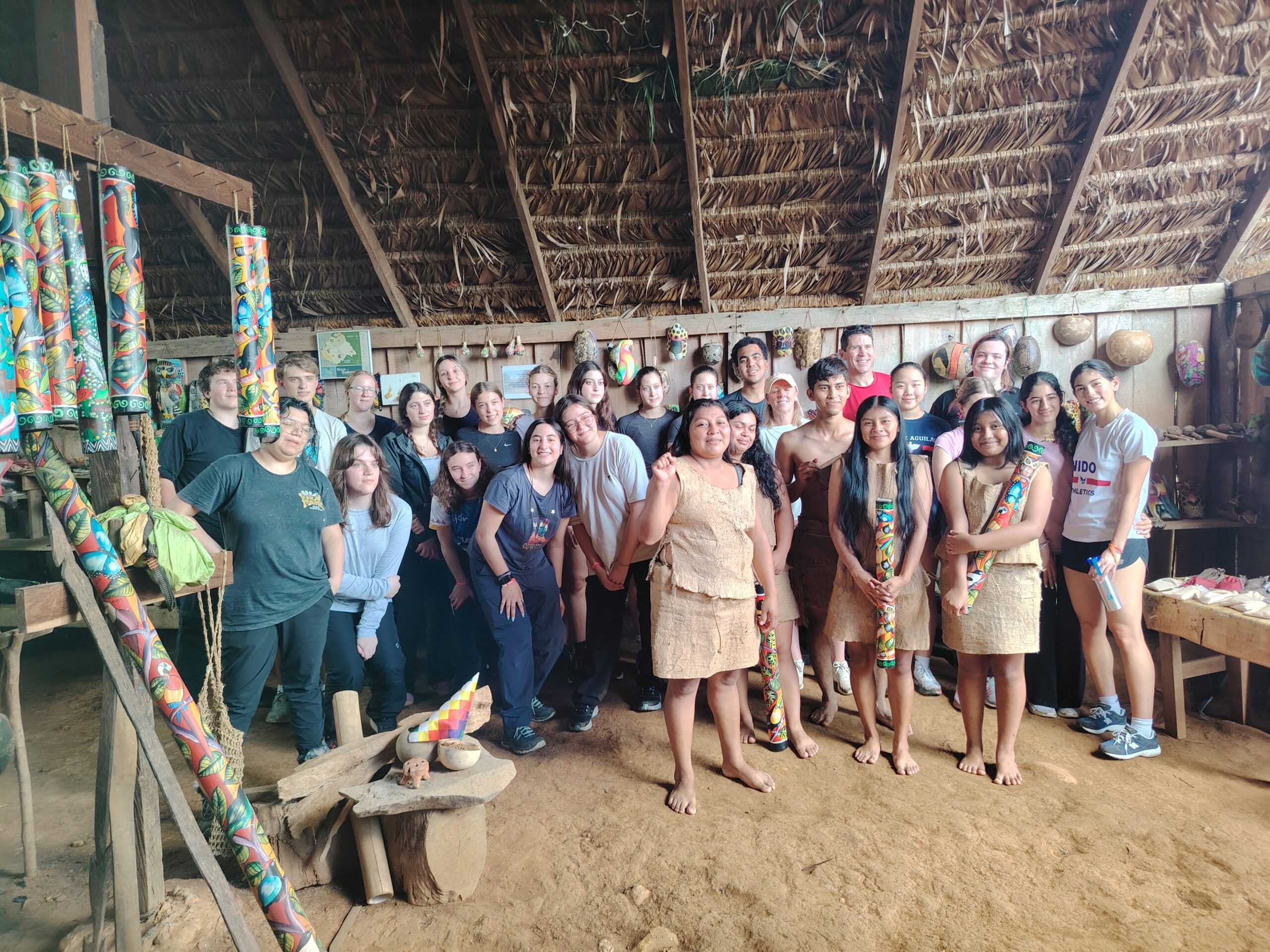
Kagumu students on a study abroad program with the Maleku community
Choose Local Partners With Purpose
The right local partner can completely change the quality of a study abroad experience.
A university should look beyond an impressive website or an attractive activity and ask a few practical questions: Who is leading the work? What expertise do they bring? What does the organization actually need from students?
The answers should be clear before the program begins.
Faculty and providers should also agree on the practical details early. Group size, accessibility, language, equipment, photography, consent and data ownership can all affect whether an activity works well in the field.
Just as importantly, students need a role that makes sense.
If a conservation organization needs trained researchers, a group of visiting students should not be presented as if they can replace them. A short-term group may be able to observe, document, assist with a supervised task, or learn from practitioners. The value comes from making that contribution appropriate to their experience and the project’s needs.
Kagumu’s approach is built around long-term relationships with project leaders, local guides, social entrepreneurs and providers, with an emphasis on understanding how tourism is actually working for the communities involved.
That mindset matters because local communities should not be treated as another stop on the itinerary. They are part of the learning environment.
Make Fieldwork Meaningful, Ethical and Rigorous
Not every group needs to conduct formal research. Depending on the program, students might keep structured field journals, conduct guided observations, complete a habitat assessment or take part in supervised interviews or data collection.
The method should match the students’ experience, the time available and the question they are trying to answer.
A field day that looks perfect on paper can quickly become exhausting when you add travel, heat, terrain, weather and different levels of fitness or accessibility. Leave room for rest and contingency plans without losing sight of the learning objective.
The same applies to the environmental footprint of the program. Transport, accommodation, food, procurement and group behavior all form part of the sustainability conversation.
Kagumu’s current Costa Rica programs, for example, combine conservation experiences with cultural immersion and time for students to process what they have seen rather than moving immediately from one activity to the next.
That pause can be surprisingly important. Students might spend the morning learning about wildlife rehabilitation and the afternoon discussing what they observed, what surprised them, and where the limits of their own understanding lie.
Turn Experience Into Academic Learning
Reflection gives students the chance to connect what they have seen in Costa Rica with the concepts they have been studying at university. A short daily prompt, field notes or a small-group discussion can be enough to start that process.
The questions can also go beyond “What did you see?”
Ask students what surprised them, which stakeholders were represented, where they saw trade-offs, and whether the conservation solution they encountered is producing the impact it intends to create.
That last question is particularly valuable. An activity can produce an immediate result without necessarily creating long-term conservation impact. Students should learn to recognize the difference.
And the learning does not have to stop when the flight home does. A post-program discussion or assignment can help students revisit their findings, consider what has changed in their understanding and, where appropriate, follow up on their responsibilities to local partners.
Measure What the Program Actually Achieves
Evaluating a conservation-focused study abroad program means looking at more than whether students enjoyed it.
Academic value can be assessed through student work, faculty observations, pre- and post-program questions or a simple rubric connected to the original learning outcomes.
There is another side to measure: the value created for local partners.
Before the program begins, universities and partners can agree on realistic indicators. Perhaps students produce useful data or materials, provide appropriate support to a restoration project, or contribute to a longer-term initiative.
The important thing is to be honest about what the program can claim. A few days of fieldwork cannot prove that an ecosystem has been restored or that a conservation problem has been solved.
Partner feedback should therefore be part of the evaluation. If a local organization tells you that an activity was useful, unnecessary or could have been approached differently, that feedback can make the next program better.
How Kagumu Helps Universities Bring It Together
Designing a conservation-focused program takes more than finding interesting places to visit. Faculty need to connect academic objectives with the right experiences, local expertise, logistics, and responsible practices.
This is where Kagumu Adventures can support universities.
Our role is to help translate faculty objectives into a curriculum-led Costa Rica program, coordinating the local experiences, logistics, and sustainability considerations needed to make the itinerary work in practice.
Planning a Costa Rica study abroad program? Talk to Kagumu about your learning outcomes, program length, and group needs, and we can explore what a meaningful, conservation-focused experience could look like for your students.


