
Travel insights from Latin America

Author Simon Willis | Published on October 16, 2026
Nervous about gathering enough interest among your student population for the next study abroad fair?
As study abroad professionals and advocates for international education, you’ll know that running a range of successful study abroad programs heavily depends on student buy-in.
You’ll also know that a well-attended study abroad fair is the perfect chance to gather interest. Nothing beats a packed fair with a buzz of excitement, energy, and enthusiasm for the international opportunities on offer.
To ensure students turn up in numbers to your next study abroad fair, we have consulted with our expert internal team as well as a range of university partners to give you some practical, field-tested strategies.
Decide What Successful Turnout Looks Like
Try to avoid judging an event’s success purely by the overall headcount in the room. Total footfall rarely tells the whole story. A hall packed with casual passers-by grabbing free tote bags does not necessarily build a strong pipeline for your study abroad programs.
To make your study abroad marketing truly effective, start by defining what meaningful turnout looks like for your specific institution.
Shift your primary metrics toward actions that demonstrate real intent, such as:
- Registrations and actual attendance from targeted academic departments (e.g., Marketing Majors or international business cohorts)
- Program-specific inquiries and direct conversations with a Study Abroad Advisor
- QR code scans for digital brochures or application guides
- Booked advising sessions and started applications immediately following the event
Take a look at data from your previous events. Compare early registrations against final attendance figures, evaluate which promotion channels drove the most engaged visitors, and track which fair interactions actually converted into submitted applications.
By identifying a small number of priority student groups rather than broadcasting a single generic message to the entire campus, you can design a focused effort that attracts students who are genuinely ready to take the next step.
Give Students a Specific Reason to Attend
Students are constantly inundated with flyers, emails, and event invites. Generic slogans like “Explore the World!” or “Discover New Horizons!” rarely motivate a busy student to alter their daily walk across campus.
To break through the noise, frame your event promotion around the precise, practical questions keeping your students up at night:
- Can I afford this? What scholarships, financial aid, or grants apply to my situation?
- Will these credits count directly toward my degree progress so I can still graduate on time?
- How do I fit a semester or summer program into a tight academic schedule?
- What is daily life actually like on the ground in another country, and how is this different to what they do now?
Replace vague travel language with clear, concrete value propositions. Show don’t tell. Allow the language of a destination to bring the experience to life through specific details of what they will be doing.
Example:
Vague: “Mexican cooking class”
Exciting: “Learn to make traditional tortillas from scratch with a Mexican abuela in the rural town of Cuetzalan.”
Tell students exactly what they will gain by attending: meeting returned peers, comparing costs across several destinations, or getting direct application support on the spot.
Across every poster, email header, and campus screen, ensure the date, precise location, duration, and direct benefits are unmistakably clear.
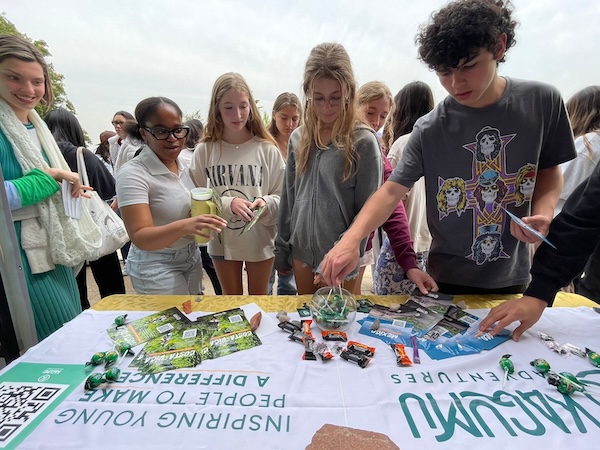
Students viewing Kagumu programs at Study Abroad fair
Promote Through People Students Already Trust
Utilize the passion and enthusiasm of youth by tapping into your student population to help promote the study abroad fair.
Broad institutional emails have their place, but students pay the closest attention to recommendations from people they interact with every day: their classmates.
Peer-to-peer recommendation and faculty encouragement are among your most powerful promotional assets.
Coordinate directly with student societies, groups, and returned study abroad participants.
To make their involvement as seamless as possible, provide them with ready-made materials, such as short captions, graphics sized for each platform and direct sign-up links, so promoting the fair takes them minutes.
Student testimonials are often more persuasive than official promotion, as prospective applicants relate to peers who have had the same experience.
According to research on student storytelling highlighted by NAFSA, leverage returned students as advocates who share real, grounded experiences rather than polished promotional scripts.
“Past participants are the most persuasive voice a study abroad office has. Prospective students relate to their experiences and trust their advice.” Ali Maghoo (NAFSA Region III Spanish Consulate Liaison Officer)
Design the Fair with Intention
The physical layout of your fair heavily dictates the quality of interactions that take place inside the room. Avoid organizing stands strictly by geographic region if that layout does not reflect how your students search for options.
Consider structuring your zones around student decision-making stages, academic disciplines, or specific practical questions:
+———————————————————————–+
| ENTRANCE / INFO |
| “Not sure where to begin? Start Here!” |
+———————————————————————–+
|
+————————-+————————-+
| |
v v
+———————————-+ +———————————-+
| ACADEMIC & DEGREE FIT | | FINANCES & SCHOLARSHIPS |
| – Business, STEM, Humanities | | – Grants, Aid, Budgeting |
| – Faculty-Led Opportunities | | – Financial Aid Advising |
+———————————-+ +———————————-+
| |
+————————-+————————-+
|
v
+———————————————————————–+
| RETURNED STUDENT LOUNGE |
| – Peer-to-Peer Q&A, Social Activities, Advice |
+———————————————————————–+
A clear floor plan prevents visitors from feeling overwhelmed. Set up a welcoming “Start Here” station near the entrance staffed by a Study Abroad Advisor who can guide undecided students toward the right tables.
Ensure returnees and staff are briefed on holding meaningful, practical conversations that cover both the exciting opportunities and the logistical realities of living abroad.
Keep accessibility, line flow, and ambient noise levels in mind so every visitor can engage in comfortable, low-pressure conversations.
Make the Next Step Simple
A common pitfall of campus fairs is allowing enthusiastic conversations to end without a clear follow-up action.
Every interaction should give the student one logical, immediate next step tailored to where they are in their decision journey.
Avoid overwhelming students with extensive paperwork or long forms. Offer ways to capture their interest and keep the momentum going:
- Display QR codes at every table leading directly to targeted landing pages.
- Provide quick digital check-in forms that request only essential details (name, email, major, and primary area of interest).
- Offer immediate sign-ups for upcoming departmental info sessions or 1-on-1 advising appointments.
Always ensure accessible alternatives (such as paper sign-up sheets or quick staff-assisted entries) are available for students who prefer not to use digital options.
Clearly communicate what students will receive after providing their contact information, whether it is a tailored program breakdown, a funding guide, or a deadline reminder.
Follow Up While Interest Is Still Fresh
The work done after the doors close is just as crucial as the preparation before the event.
A student’s motivation is highest in the 24 to 48 hours following the fair; do not let that energy dissipate under a wave of routine coursework.
Avoid sending out a single, generic “Thanks for attending!” broadcast email to your entire attendee list. Instead, segment your communications based on the specific program, field of study, or primary concern captured during the event:
Once your post-event outreach is underway, evaluate your performance metrics. Send surveys to attending students to gauge how you can improve performance next year.
Tips for a student study abroad fair survey:
- Make it very easy and quick to use (tell them how long it should take in the intro)
- Make it easy to access – QR codes are great: make sure they work beforehand!
- Offer an incentive. Ask students to complete a survey and offer them a chance to enter a raffle and win a prize as a reward.
- Allow students to complete the survey there at the fair; this will ensure they actually do it
Final Thoughts
A successful study abroad fair is never built in a day, nor is its value fully realized when the event ends.
Strong student turnout is the result of thoughtful preparation, targeted messaging through trusted campus allies, and a clear, seamless pathway for students after they leave the room.
When you treat the fair as one intentional touchpoint within a broader recruitment journey, you turn brief conversations into meaningful global experiences for your students.
If you are currently looking to expand your university’s program offerings or need support developing tailored, high-impact itineraries, explore our dedicated resources on University & College Study Abroad Programs or learn more about building customized Faculty-Led Study Abroad journeys that align directly with your curriculum and institutional goals.
Frequently Asked Questions
How far in advance should a university promote a study abroad fair?
You should begin promotion 3 to 4 weeks prior to the event. Early outreach allows partner faculty to include the date in course syllabi, while targeted promotional blasts (such as email reminders, social media pushes, and digital signage across campus) achieve maximum impact during the final 10 to 14 days.
What should students be able to do at a study abroad fair?
Students should be able to compare program structures, clarify financial aid and scholarship options, understand how credits transfer toward their major, speak directly with returned peers about daily life abroad, and register for a clear next step such as an advising appointment or program-specific information session.
How can faculty help promote a study abroad fair?
Faculty can support turnout by sharing brief, pre-made slide decks or promotional announcements during lectures, hosting short 5-minute visits from returned study abroad ambassadors in their classrooms, linking fair details on course online learning portals, and directly encouraging students whose academic goals align with specific overseas opportunities.
If you are struggling to engage faculty with international education at your university, we have you covered: Read our blog on building faculty support for study abroad programs here.
How should universities follow up with students after the fair?
Follow up within 24 to 48 hours using segmented, targeted messaging based on the student’s field of study or declared interests. Provide direct answers to common questions regarding costs and course fits, outline key application deadlines, and include a direct link to schedule an advising session.
How can turnout and engagement be measured?
Engagement should be measured through multi-stage tracking: total check-ins, percentage of attendance from priority departments, number of advising appointments booked during or immediately after the fair, QR code scans for application materials, and the total conversion rate of fair attendees who ultimately submit a program application.


