
Travel insights from Latin America
Faculty-Led Study Abroad in 2027: Trends Universities Should Understand
Author Juan Felipe Jimenez | Published on September 9, 2026
Study abroad programs are changing.
Nowadays, the challenge is bigger than choosing a destination and building an itinerary.
Universities are balancing tighter budgets, more varied student needs, growing expectations around sustainability and accessibility, and much more.
Faculties need to rethink what makes these programs accessible, meaningful, and manageable to face current trends and meet their students’ expectations and needs.
At the same time, the case for international education remains strong. The Institute of International Education reported that 298,180 U.S. students studied abroad for academic credit in 2024, a 6% increase from the previous year.
A faculty-led study abroad program can extend the classroom. Faculty bring the academic vision, while educational travel agents, like Kagumu, and our local partners help turn that vision into a practical experience on the ground.
In this blog, we will look at the latest Faculty-led study abroad trends in 2026 and 2027 and what universities need to do to prepare.
Affordability and Transparent Costs Will Determine Participation
For many students, the biggest question about studying abroad is simple: How much is this going to cost me?
The answer is rarely just the program fee.
A realistic study abroad budget may include tuition or program fees, international flights, accommodation, meals, travel insurance, visas, health requirements, local transportation, and personal spending.
There may also be costs that appear small individually but add up quickly: airport transfers, baggage, vaccinations, excursions, laundry, mobile data, or a few extra meals.
This is why building transparent budgets matters. Students and families should be able to see the full study abroad costs early in the decision-making process, rather than discovering additional expenses after they have already committed.
A useful starting point is to divide costs into four categories:
| Cost category | Example |
| Included | Accommodation, local transport, scheduled activities |
| Required | Flights, insurance, visa or health requirements |
| Estimated | Meals, local personal transport, daily spending |
| Optional | Additional plans or personal activities |
This simple breakdown can make the difference between a program feeling financially realistic and feeling like a financial black hole.
It also gives faculty and study abroad offices something concrete to work with. Instead of simply asking whether a program can be made “cheaper”, teams can identify exactly which elements are driving the study abroad program costs.
Recent conversations across the field reflect this shift. NAFSA’s 2026 coverage of faculty-led programs highlights affordability as a central challenge, noting that rising airfare and in-country expenses are making short-term programs harder to price within students’ budgets.
The solution is not necessarily to remove the experiences that make a program academically valuable. Sometimes it is about making smarter choices earlier.
Public transportation may replace private coaches where practical. A carefully chosen neighborhood may provide better-value accommodation. A shorter itinerary may create more academic depth than a rushed tour of five cities.
At Kagumu, this kind of thinking is particularly important because we don’t see an itinerary as a collection of attractions. The destination, accommodation, transport, and activities should all support the purpose of the program. For example, we prioritize walking tours and seek low-cost transportation alternatives, like taking the cable car in Medellin, which is not only cheaper than a private coach but offers a far more memorable experience with better views!
Financial aid should also be part of the conversation from the beginning.
Universities can coordinate program development with financial aid teams, identify scholarships, consider staged payments, and give students enough time and resources to fundraise where appropriate.
An affordable study abroad program is therefore not only about the final price. It is also about whether students have a realistic path to paying for it.
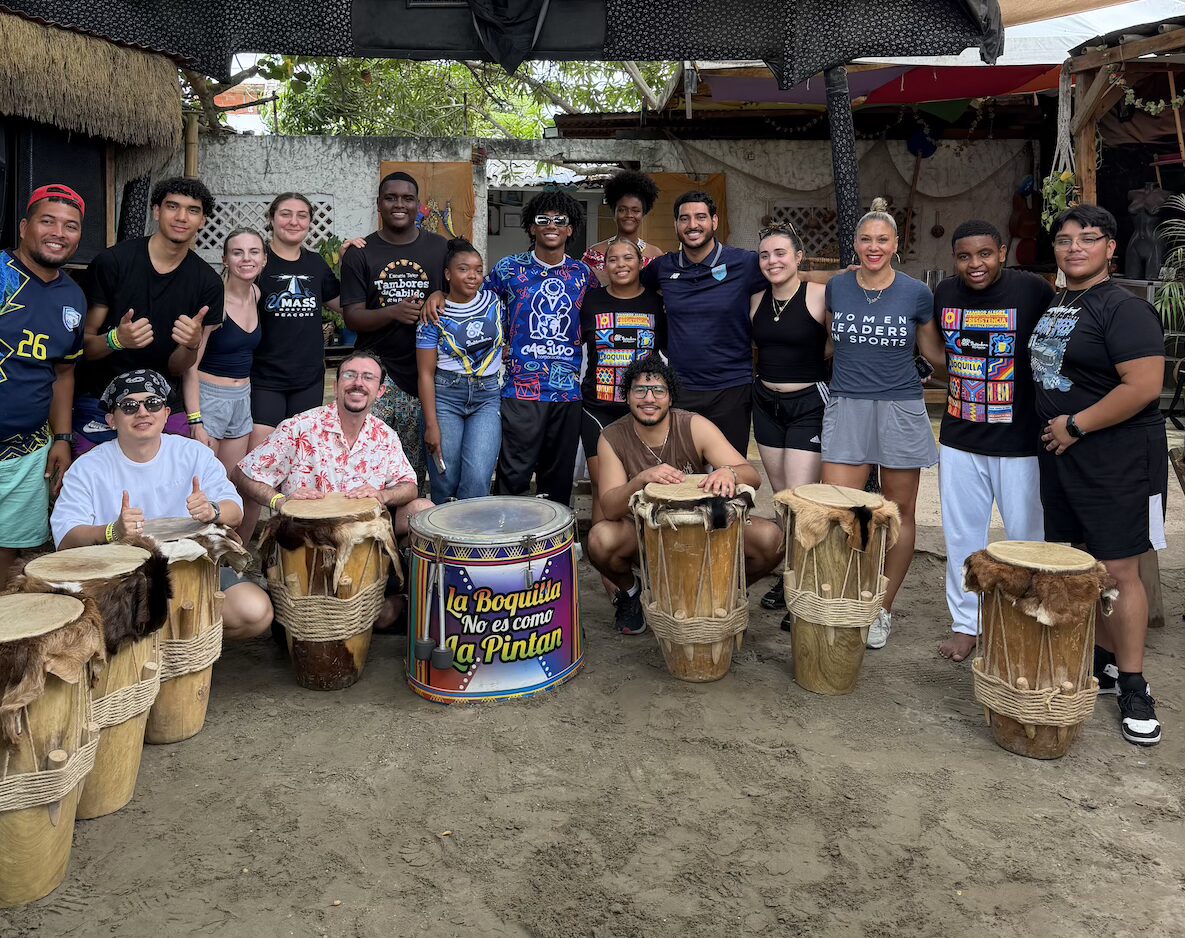
University of Massachusetts Boston students on a study abroad program in Colombia
Accessibility Must Be Included From the Start
Accessibility should not be an afterthought. It should influence the program from the moment a destination is being considered.
That means understanding the particular needs your students might have. Ask yourself:
How many stairs are involved? How long is the longest journey? Are bathrooms accessible? How much walking happens between activities? Where can students rest? How can I make available all the activities for all students? Will they feel comfortable in the hotel?
Accessibility can become particularly challenging when a program involves fieldwork or less conventional destinations.
A spectacular rural site may have limited infrastructure. A community visit may involve uneven terrain. A long bus journey may be academically worthwhile but exhausting for some students.
That does not automatically mean the experience should be removed.
It means faculty and your trusted educational travel operator should identify the challenge early and look for an appropriate solution, including equivalent learning activities where necessary.
Early conversations about accessibility are therefore essential. They allow universities to assess what is genuinely feasible before deposits are paid and itineraries become difficult to change.
The same principle applies to accommodation and transportation. A hotel can look perfect on paper but have no elevator. A destination can be easy to reach by bus but involve several hours of travel between academic activities.
This is also where local knowledge becomes valuable. A partner working regularly in the destination can often spot practical issues that are invisible from a spreadsheet or online booking platform.
Kagumu’s university programs, for example, are built around local coordination and destination knowledge, with local bilingual guides and on-the-ground support forming part of the program structure.
AI and Technology Will Support Planning, Without Replacing Judgement
AI is here to stay. Gemini, ChatGPT, et al are already becoming part of university planning, and faculty-led study abroad programs are no exception.
Used well, these tools can help organize information, draft routine communications, support non-sensitive translation and explore different itinerary scenarios.
But AI should remain a planning tool, not a decision-maker.
Destination information can be outdated, generated recommendations can miss local context, and sensitive student information should never be entered into an AI system without understanding how that data is handled.
Students should also know that an AI tool is not a substitute for official university communication or emergency support.
NAFSA’s recent discussion of the sector points to a similar reality: today’s programs are becoming more structured and institutionally supported, while faculty still play a critical role in the student experience through their decision-making.
For 2027, universities should establish simple rules around what AI can be used for, who verifies its output, which decisions require human approval, and what happens if connectivity fails.
Kagumu’s approach to program development reflects this balance.
Our work focuses on translating academic goals into practical field experiences, while local partners provide the context, relationships, and on-the-ground knowledge that technology cannot replicate. Our recent guide to STEM study abroad for busy degree programs explores this approach in more detail.
Flexible, Curriculum-Integrated Formats Will Keep Growing
Not every student can spend four weeks abroad. Family responsibilities, course requirements, and the overall study abroad cost can make a traditional format difficult to fit into a degree.
That does not mean international learning has to be left out.
Shorter, course-embedded and hybrid formats can give students meaningful time abroad while working around the realities of university life. The key is making the academic purpose clear: what can students learn in the destination that would be harder to teach in the classroom?
A shorter program can still have plenty of academic depth when field activities, preparation, reflection, and assessment are connected. One focused question explored properly can be more valuable than an itinerary packed with ten unrelated visits.
A faculty-led program should fit the course, not force the course to fit the trip.
Gen Z Engagement Will Require Clarity, Belonging and Visible Purpose
Today’s students are used to having information instantly available. When planning a study abroad program, that expectation does not disappear.
Students want to know what the program costs, when applications close, what a typical day looks like, who they can contact and what is actually expected of them. Unclear information can quickly become a barrier to participation.
But engagement starts before departure. Creating opportunities for students to meet one another, ask honest questions and discuss cultural differences or travel concerns can help build a sense of belonging before they ever board a plane.
Purpose matters too. Students are more likely to engage with an activity when they understand the impact on the communities and how it connects to their course or future goals.
A key element to every Kagumu itinerary is the inclusion of reflection sessions at the end of the day, giving students space to process what they have learned, ask questions, and be pushed to think more deeply.
That does not mean every moment abroad needs to feel like an assignment. There should still be room for curiosity, spontaneity, and fun.
Our recent First 48 Hours Abroad guide makes a similar point from the faculty leader’s perspective: those first days can be exciting but also unfamiliar and intimidating for students, making clear guidance and thoughtful support particularly important.
Experiential Learning Will Need Measurable Outcomes
Experiential learning works when students prepare for an experience, engage directly with it, reflect on what they have seen, and connect it back to their academic discipline.
A visit to a rainforest, for example, becomes much more meaningful when biology students collect observations, speak with local researchers and use the experience to evaluate concepts discussed in class.
The same applies to business, history, sustainability or Spanish. The destination should give students something to investigate, question or interpret, not simply something to photograph.
This also makes it easier for universities to demonstrate the value of a program. Learning outcomes can be assessed through field notes, reflective assignments, presentations, research projects, or feedback from local partners.
Kagumu’s recent Costa Rica study abroad example illustrates this approach well.
Rather than simply taking environmental science students to a cloud forest, a visit to a local family farm and rescue center also connects a range of concepts to on-the-ground projects with direct learning from people involved in conservation.
For 2027, the question should therefore move beyond “Where should we take our students?” A better question is: “What should students be able to understand, apply or evaluate because they went there?”
That shift can turn a memorable trip into meaningful academic learning.
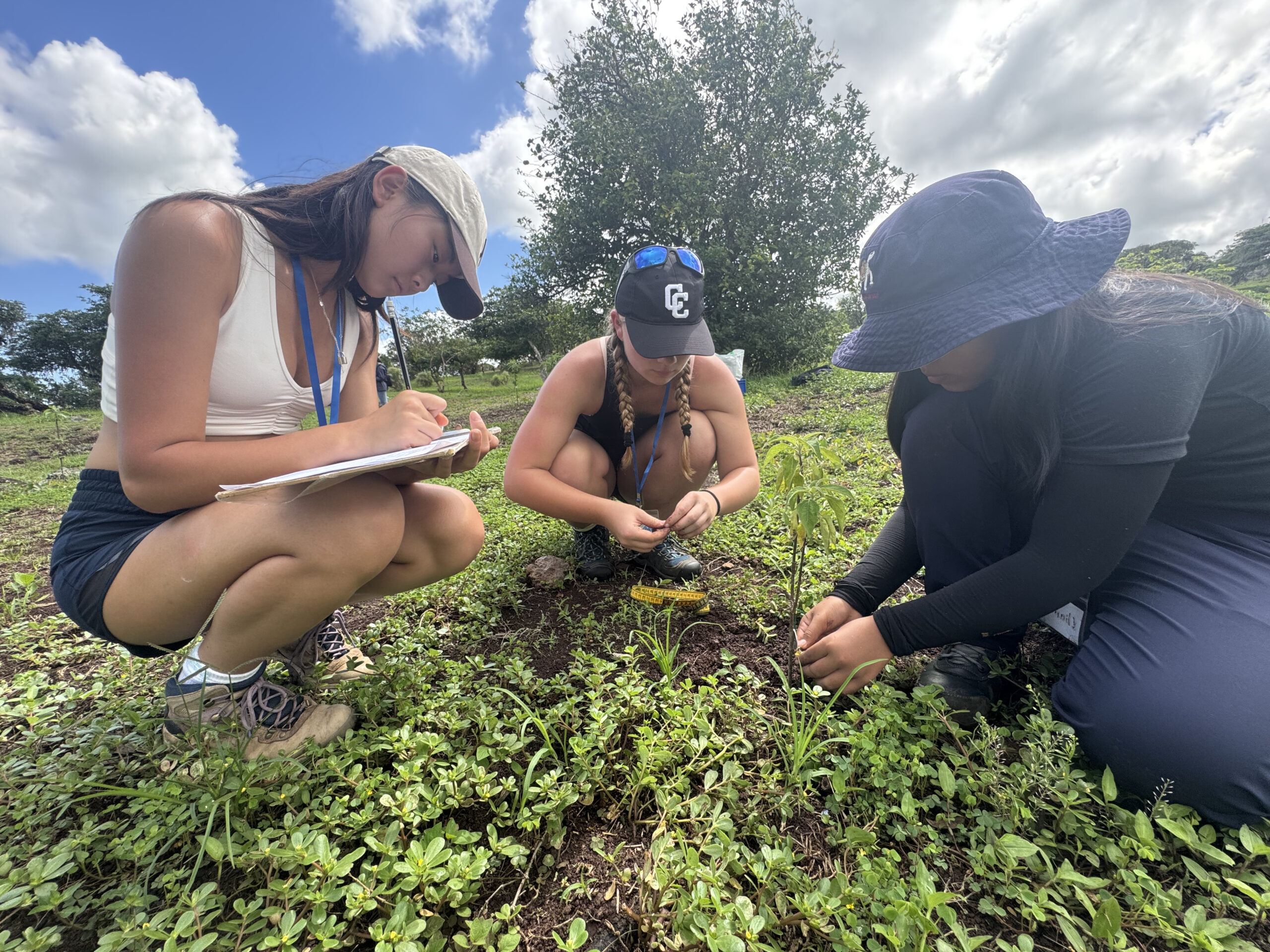
Students engaging in field research on a study abroad program in Costa Rica
Health, Safety and Wellbeing Planning Will Become More Integrated
Faculty-led programs need to consider physical and mental health, medication, dietary needs, fatigue, alcohol expectations, harassment, identity-related concerns and group dynamics alongside the itinerary itself.
Clear responsibilities are just as important. Faculty, university staff and local partners should know who makes decisions, who communicates with students and where an issue should be escalated if something goes wrong.
Good preparation also makes the faculty leader’s job easier. Scenario training, emergency contacts, backup transportation, welfare check-ins, and verified medical options can prevent a stressful situation from becoming a crisis.
The U.S. Department of State’s Students Abroad guidance recommends that students understand their destination’s health and safety environment, insurance requirements, emergency resources, and how to access U.S. consular assistance before departure.
These considerations are equally useful when universities are designing their own preparation and support systems.
Kagumu’s Faculty Leader’s Checklist for the First 48 Hours Abroad takes a similarly practical approach, covering arrival plans, emergency information, transportation, accommodation, and early welfare checks.
How Kagumu Adventures Can Help
Designing a faculty-led study abroad program involves considerably more than finding flights and booking hotels.
The best programs start with the academic objective and work outward: What should students learn? Who should they meet? Which field experiences will make the subject more tangible? What does the university need from the program to approve it?
That is where Kagumu Adventures comes in. We work with universities and faculty to turn academic goals into purpose-driven programs across Latin America, combining curriculum-focused experiences with local knowledge, practical logistics, and responsible tourism.
Our team can support the process from early program development through to the experience itself, including itinerary design, accommodation, transportation, local guides, orientation, community partnerships and on-the-ground coordination.
Starting with an exploratory call with Kagumu, faculty can then build an itinerary around their academic objectives, using our extensive local knowledge and contacts.
Our approach to sustainability is equally practical. Kagumu is Travelife Certified, following an independent assessment covering areas including environmental management, biodiversity, working conditions, human rights, local communities and sustainable supply chains.
Ultimately, a successful faculty-led program should make sense from three perspectives: the university, the student and the destination.
With thoughtful program development and the right local partners, affordability can coexist with academic depth. Accessibility can be built into adventure. Sustainability can become part of the curriculum.
If your university is planning a faculty-led program for 2026 or beyond, Kagumu Adventures can help you turn your academic goals into a locally informed, curriculum-focused experience in Latin America.


