
Travel insights from Latin America
10 Questions Every Faculty Member Should Ask Before Choosing a Study Abroad Provider
Author Juan Felipe Jimenez | Published on November 18, 2026
It can be hard to know where to start when designing a study abroad program.
If you can, however, identify a study abroad provider with extensive knowledge of the destination country and a strong sense of academic learning, coupled with excellent communication skills and a commitment to sustainable and ethical travel, the process will become a lot easier.
We would go as far as to argue that it could even be an enjoyable experience!
But how do you identify which study abroad providers can offer the best experience?
The following ten questions provide a practical framework for comparing providers. Use them alongside the Forum on Education Abroad’s Standards of Good Practice, which offers a useful benchmark for program quality and responsible partnerships.
1. Can you build the program around our learning outcomes?
A strong educational itinerary starts with your syllabus. Ask providers to explain how activities support specific course objectives, assessment requirements, and contact hours.
Request a sample itinerary that connects each experience to a learning outcome. For example, for the University of Massachusetts Boston, we designed a customized itinerary based on the discovery meeting we had with Julian Alonso Restrepo, the faculty leader.
Part of their requirements was for students to experience different levels of sports, from professional through to adaptive, and the influences of different cultures.
With this in mind, our team built an itinerary that included visiting professional soccer clubs and adaptive taekwondo academies in Medellin through to amateur baseball and football schools on the Caribbean coast.
Watch Julian testimonials to learn more about his experience: https://youtu.be/TqMdGyXPNsY?si=hUz11msMIOLzChjg
If you are considering faculty-led study abroad programs, look for evidence that academic content shapes the itinerary rather than being added to a conventional tour.
2. What can change if our academic priorities or circumstances change?
Enrollment numbers, university approval timelines, and conditions at the destination can affect a program. Ask which elements are flexible, what changes might affect the budget, and when decisions must be finalized.
A useful answer distinguishes between activities that can be adapted and essential components that cannot be replaced easily. Establishing these boundaries early helps faculty protect learning objectives without creating unrealistic expectations.
3. Who designs and delivers the local academic content?
Ask who will lead field activities, facilitate discussions, and provide destination-specific knowledge. Find out about their qualifications, relevant experience, and role in shaping the itinerary.
At Kagumu, we are extremely proud to work closely with local providers, organizations, and community-based projects across Latin America. These relationships help us connect faculty with people who understand the realities of their destinations and bring valuable perspectives into the learning experience.
By working directly with local partners, we also help ensure that educational travel creates value beyond the student experience, supporting the people and initiatives that make each destination worth exploring.
Download our brochure on SDG-aligned projects you can visit in Latin America here.
4. How are local partners selected and involved in program design?
Meaningful community engagement requires more than arranging a visit. Ask how partners are chosen, how their time and expertise are compensated, and whether they help determine what students learn and how activities are conducted.
Also ask how the program avoids treating communities as classroom exhibits. Are visits based on shared objectives? Do hosts have a say in what students observe, photograph, or discuss?
Kagumu explores this principle in its article on how tourism impacts local communities in Colombia. These considerations matter wherever students learn from people whose lives and work are directly connected to the destination.
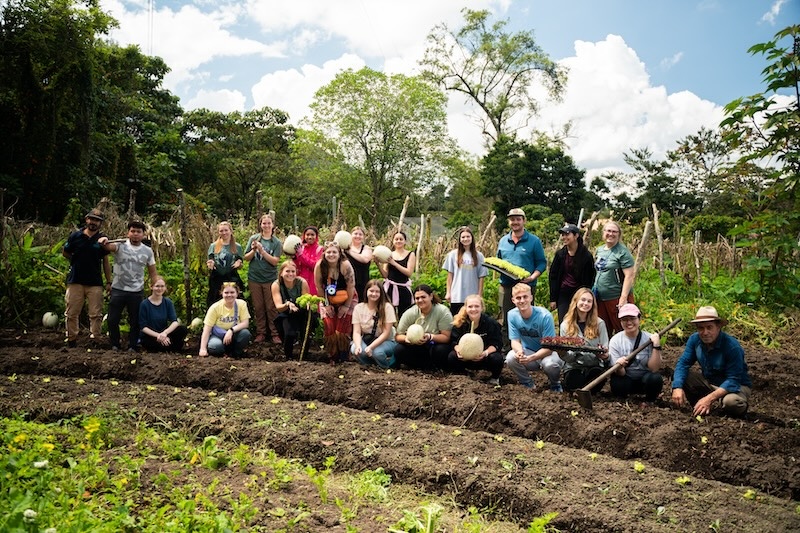
Students on a study abroad program, visiting a farmer outside of Medellin, Colombia
5. What risk assessments and emergency procedures are in place?
Ask for destination-specific risk assessments, incident response procedures, emergency contacts, and a clear explanation of who makes decisions during an incident.
Clarify who is reachable after hours, how students are accounted for, and how responsibilities are divided between the provider and your university. These details are particularly important when programs involve multiple destinations, remote locations, or activities outside conventional tourist settings.
Kagumu explores these considerations in more detail in our guide to safety and risk assessment for trips in Latin America, which offers additional context for faculty planning educational travel in the region.
The U.S. Department of State’s guidance for students abroad also offers a useful starting point for discussing preparation and emergency communication.
A credible provider should explain its procedures and limitations clearly rather than relying on broad assurances that travel is safe.
6. How will you support students with different needs?
Ask how the team assesses health, disability, dietary, identity-related, and wellbeing needs before departure. Find out what information must be shared, who coordinates reasonable adjustments, and which limitations exist at particular destinations.
For example, a remote field site may offer valuable learning opportunities but have limited physical accessibility or medical facilities. Faculty need to understand these constraints before committing to an itinerary.
Discuss health insurance, access to medical care, accommodation requirements, and support for students who may need additional assistance. No provider can guarantee that every need can be met everywhere, but it should explain what is feasible and help you assess alternatives.
7. What preparation will students and faculty receive before departure?
Good preparation helps students arrive ready to learn, not just ready to travel. Ask whether the provider offers destination-specific briefings, practical guidance, cultural orientation, and clear expectations for group conduct.
A useful predeparture guide should address local customs, safety, communication, and what students will encounter during academic activities.
For instance, students visiting a community-led project should understand its purpose and context before arriving. This preparation makes conversations more informed and helps students engage respectfully.
8. How do you reduce environmental impact and encourage responsible engagement?
Ask providers to explain their approach to supplier selection, group size, transportation, waste reduction, and community relationships. Look for specific practices rather than general claims about sustainability.
At Kagumu, responsible travel is part of how we approach educational programs. We are Travelife Certified, an internationally recognized sustainability certification for the tourism industry. This reflects our commitment to integrating responsible business practices into the way we work and the itineraries we build.
Our educational trips in Latin America illustrate how travel can connect curriculum-based learning with local cultures, community initiatives, and sustainability-focused experiences.
The goal is not to make every itinerary perfect. It is to understand the decisions behind it and whether environmental and social considerations influence how the program operates.
9. What is included in the price, and what could change?
Request an itemized proposal that separates included services from additional expenses. Clarify international flights, accommodation, transportation, meals, activities, health insurance, faculty expenses, and any university charges that fall outside the provider’s fee.
Ask which costs are fixed, which depend on final enrollment, and what happens if the itinerary changes or the group does not reach its expected size.
A lower headline price may exclude support or services another proposal includes. Compare the total expected cost and the assumptions behind it, not just the initial figure.
For a deeper budgeting framework, see Kagumu’s guide to building transparent study abroad budgets.
10. How will communication work, and what evidence can you share from comparable programs?
Ask who your main contact will be during planning, who will coordinate the program on the ground, and how quickly questions or problems are handled.
Request references from comparable programs, examples of previous itineraries, and information about how outcomes are evaluated after travel. If a provider claims to deliver strong academic results, ask how it measures them.
A post-program evaluation can help faculty assess whether activities met learning objectives, gather student feedback, and identify improvements for future cohorts.
How to Compare Study Abroad Providers
Use the same criteria and evidence requirements for every proposal. A simple scorecard can help faculty, study abroad offices, procurement teams, and risk managers compare providers without allowing an impressive itinerary or persuasive sales conversation to dominate the decision.
Consider scoring each category from 1 to 5:
- Academic alignment: Are learning outcomes clearly reflected in the itinerary?
- Local expertise: Are relevant professionals and community partners involved?
- Safety and support: Are procedures, responsibilities, and limitations documented?
- Responsible travel: Are environmental and community considerations reflected in practical decisions?
- Cost and delivery: Are pricing, communication, and responsibilities transparent?
Agree on essential requirements before reviewing proposals. Record unanswered questions, assumptions, and commitments that need to be confirmed in writing.
The score itself matters less than the evidence behind it. A provider that acknowledges a limitation and explains how it will be managed may offer a more credible proposal than one that promises everything without supporting details.
Final Thoughts
The right study abroad provider should make your academic goals easier to deliver while giving your institution clear information about safety, student support, local relationships, and costs.
At Kagumu Adventures, we approach faculty-led programs through collaboration with educators, developing itineraries around their curriculum and the needs of their students. If you’re evaluating options for a program in Latin America, we’d be happy to discuss how we would answer these ten questions for your proposed itinerary.
Frequently Asked Questions
What does a study abroad provider do?
A study abroad provider helps institutions plan and deliver international educational programs. Depending on the arrangement, services may include itinerary design, local academic activities, accommodation, transportation, risk management, student preparation, and in-country coordination.
How should universities compare study abroad providers?
Universities should compare providers using consistent criteria covering academic alignment, local expertise, safety, accessibility, sustainability, communication, and total cost. Request supporting documentation and record unresolved questions before making a decision.
What safety questions should faculty ask a study abroad company?
Ask about destination-specific risk assessments, emergency response procedures, after-hours contacts, medical support, health insurance, incident communication, and the division of responsibilities between the provider and institution.
Should cost be the main factor when choosing a study abroad provider?
Cost matters, particularly when affordability affects student participation. However, the lowest quoted price may exclude essential services. Compare itemized budgets, support arrangements, academic value, and potential additional expenses before deciding.


