
Travel insights from Latin America
Author: Simon Willis| Published on October 12, 2026
While there are many hurdles to running a successful study abroad program, one of the biggest challenges we hear (and I personally hear as Kagumu director and NAFSA mentor) is how to build faculty support for a study abroad program.
This is, in essence, the most important aspect of a faculty-led program; without a dedicated, flexible, and passionate faculty, there is little chance of success.
Whether you are new to global affairs and study abroad and nervous about reaching out to faculty, or a seasoned global affairs professional looking to entice more faculty to lead programs, this blog is here to help.
The good news is that incentivizing faculty can be fairly straightforward and paves the way to short- and long-term international opportunities for university students.
In this blog, I will delve into how you can inspire and incentivize faculty to lead a study abroad program and offer insights from those who have done this successfully.
Start by Understanding the Real Faculty Workload
As always, trying to incentivize a person to take the lead on something involves getting to know what this entails yourself.
Knowing that leading a faculty-led study abroad program involves a lot of work is key.
You already know that before a single student steps onto a plane, a faculty leader will likely need to spend months navigating program development, institutional approvals, student recruitment, pre-departure orientation, and detailed budgeting.
Then, once on the ground, their role shifts into a 24/7 commitment, managing logistics, addressing accessibility needs, navigating cultural dynamics, and serving as the primary point of contact for student health and safety.
It is easy to overlook the quiet hours spent answering late-night student emails, adjusting itineraries on the fly, or supporting a homesick participant.
As NAFSA’s ongoing discussions surrounding faculty-led programs highlight, student expectations, risk-management obligations, and administrative complexity have grown significantly.
If we want a diverse and reliable group of educators to step into these roles, we cannot rely solely on their personal enthusiasm.
Before designing or updating your incentive structure, sit down with both experienced faculty directors and those who have hesitated to apply.
Faculty in different academic disciplines, contract types (such as tenure-track versus contingent faculty), and career stages face distinct barriers. Understanding these real-world pressures is the essential first step toward building support that actually works.
Pay Faculty for the Work They Do
As you can imagine, this is key.
Direct financial compensation is the clearest signal that an institution values the time and labor required to build a course from scratch.
When program development or travel falls outside a professor’s standard contracted teaching load, expecting them to absorb the work for free creates an unsustainable model.
Institutions approach this in several practical ways:
- Offering a direct Study Abroad Stipend for leading the trip.
- Providing overload teaching pay or curriculum development grants during the planning phase.
- Distributing separate compensation tied to recruitment and pre-departure preparation milestones.
Looking at models highlighted by NAFSA (such as Missouri State University’s published compensation framework) shows the value of formalizing pay structures.
Tip: Make sure you clearly publish the exact pay faculty will receive and when they will receive it, with the work involved in creating a faculty-led program. No one likes unwelcome surprises. As research from organizations like The Forum on Education Abroad underscores, inconsistent or informal compensation arrangements create unnecessary barriers to entry. When opportunities rely on ad hoc negotiations or departmental budgets, participation becomes uneven.
There is no single universal compensation model that fits every institution.
Fair pay depends on contract status, program length, credit load, and specific operational duties.
However, separating actual earnings from expenses is essential: reimbursing travel costs covers operational needs, while compensation pays for the faculty member’s expertise and labor.
Benefits of leading a faculty-led program
There are of course, many benefits that are not purely financial.
The benefits of leading a faculty-led program are wide-ranging, and over the years we have noted the top ones:
- Connect with your students. Nothing helps forge strong relationships like travelling together, facing new challenges, and enjoying new experiences.
- Gain better grades for your students. Any faculty member worth their salt would jump at the chance to enhance their own students’ learning and increase the likelihood of better grades. Travel truly has the potential to do this!
- Enhance your own learning. A well-planned study program would greatly enhance faculty’s knowledge of their own subject.
- Connect with their home country. Many faculty like to lead programs to their native land or even where they have worked before. This forms unique connections as described by a faculty member below.
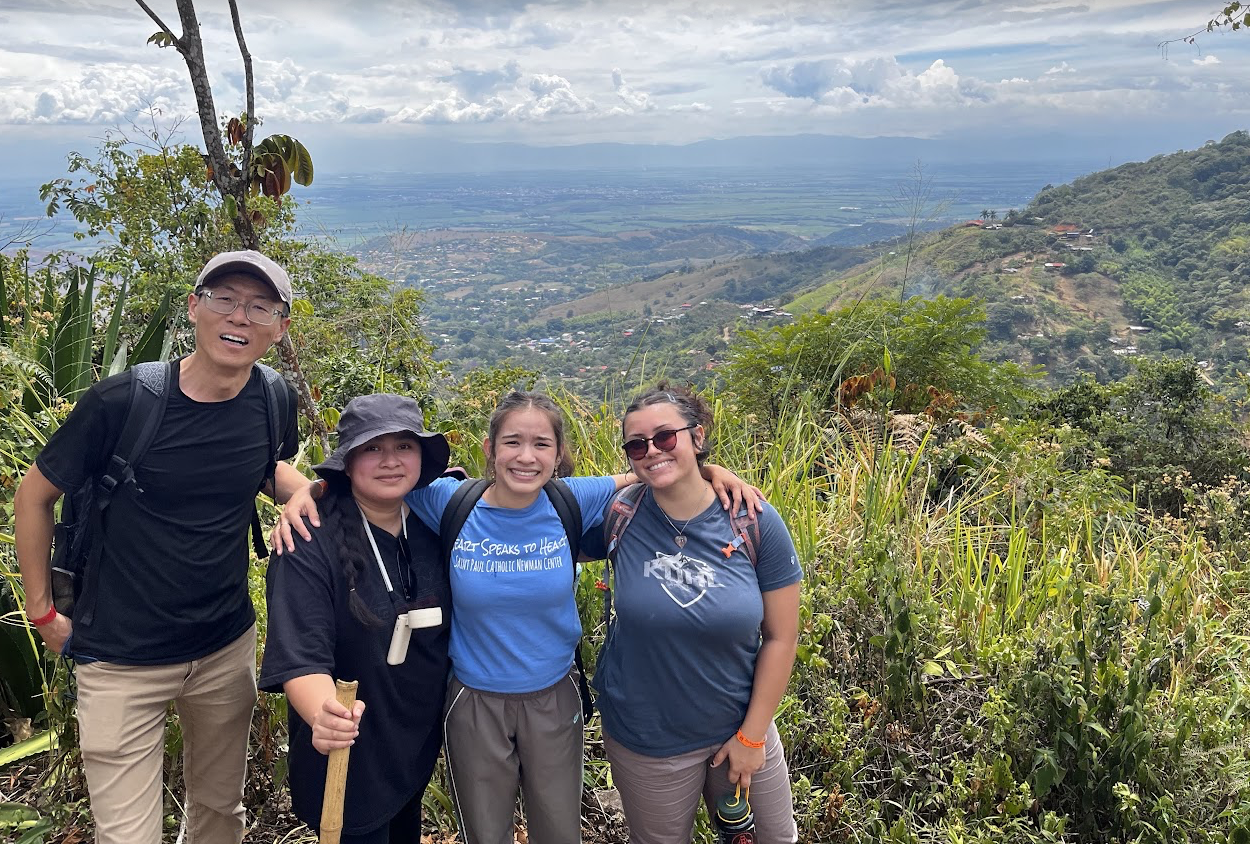
View from University of Massachusetts Boston faculty member Julián C. Alonso Restrepo, Ph.D., who led his first-ever study abroad program to Colombia, taking 14 Sport Leadership students to Medellin and Cartagena. Here’s how this program helped him reconnect with his home country:
Recognize the Program Within Faculty Workload
Financial compensation alone does not solve the challenge if a professor is expected to manage a faculty-led study abroad program on top of a full teaching load, research commitments, and departmental service.
Without official workload adjustments, leading a trip simply becomes an exhausting addition to an already full calendar.
Colleges can address this by integrating the course directly into a professor’s standard teaching load or offering a course release in the semester preceding departure.
Allocating formal service credit or providing protected time for curriculum development also ensures the work is recognized within standard institutional expectations.
Reduce the Administrative Burden
One of the most effective ways to encourage participation is removing complex logistics from the professor’s plate.
Faculty step up because they care about teaching, research, and expanding student horizons, not because they want to manage international flight rosters, track payment deadlines, or negotiate vendor contracts.
A dedicated study abroad office or an experienced university study abroad provider can take on significant operational heavy lifting, including:
- Managing vendor contracts, local transport, and group accommodation.
- Handling student document tracking, health forms, and safety compliance.
- Organizing daily itineraries, cultural activities, and local guides.
- Facilitating clear pre-departure communication workflows.
When working with a dedicated and experienced local travel operator, the burden is shared.
Support Recruitment and Student Preparation
Uncertainty around enrollment is a major barrier for prospective leaders.
When a professor feels solely responsible for filling a program to avoid cancellation, the process feels more like high-stakes marketing than academic instruction.
Centralizing recruitment support relieves this pressure.
Global engagement offices can assist by creating polished digital program pages, hosting campus-wide information sessions, coordinating target email campaigns, and connecting with academic advisors across departments.
Providing faculty with clear, approved materials regarding financial aid applicability, academic credit transfers, total program costs, and realistic daily expectations empowers them to speak confidently to prospective students.
Setting clear Application Deadlines and establishing early decision dates gives everyone transparency around program viability without putting the entire promotional weight on the instructor.
Make Leadership Valuable for Career Development
To make program leadership truly attractive long-term, institutions must ensure international work carries weight in professional advancement.
If time spent abroad is viewed by tenure committees as a distraction from research or departmental service, junior faculty will naturally hesitate to participate.
Institutions can build real value into program leadership by:
- Formally recognizing curriculum development and global engagement in annual reviews.
- Including international experiences as valid evidence for promotion and tenure portfolios.
- Aligning program leadership with university teaching awards or global engagement grants.
- Supporting research opportunities, local academic connections, and international partnerships that stem from the trip.
While travel and personal satisfaction are rewarding, they are not substitutes for career progression.
Aligning program leadership with real institutional advancement frameworks ensures that leading students abroad actively supports a professor’s long-term professional goals.
Offer a site visit to the chosen destination
Offering a pre-program site visit significantly improves both participation rates and program quality.
A funded site visit allows a professor to assess the destination firsthand. It gives the faculty the chance to test travel times, evaluate accommodation accessibility, vet local partners, and align site visits directly with course learning objectives. All of which will bring peace of mind for the real thing!
For first-time leaders, mentorship models and formal preparation are equally valuable.
Pairing a new leader with an experienced co-leader, alongside structured training in student support, basic medical training and emergency protocols, inclusive teaching strategies, and role boundaries, helps build confidence well before departure.
Share Responsibility and Reduce Personal Risk
Faculty members can feel hesitant if they worry they will be left entirely on their own to manage medical emergencies, mental health crises, or severe travel disruptions abroad.
To build trust, institutions must make their safety infrastructure explicit before asking a professor to sign on. This includes:
- Clear 24/7 emergency response protocols and dedicated institutional points of contact.
- Comprehensive international travel insurance and medical evacuation coverage.
- Defined escalation pathways for student behavioral or health issues.
- Clear guidelines on decision-making authority during an incident.
Where group sizes, itinerary complexity, or student support needs warrant it, appointing a co-leader or partnering with a local ground team ensures that on-site management is shared.
Proper preparation and reliable back-end support protect both the students and the leader, ensuring faculty are never left carrying institutional risk alone.
Finally, Evaluate Whether the Approach Is Working
Not all incentive plans are made the same.
I recommend building a sustainable strategy through ongoing evaluation. This means asking the faculty what worked and what didn’t. Send out surveys before and after the program, gather quantitative and qualitative data that can form the basis for future change and, most importantly, be open to change.
If you can hold feedback meetings afterwards too and encourage faculty to talk to other faculty about their experience.
At Kagumu Adventures, we understand the complexities of gaining faculty buy-in to lead study abroad programs, drawing from years of experience in the field and active involvement in NAFSA’s mentorship program.
If you are looking for an experienced university study abroad provider to handle the on-the-ground logistics, local community partnerships, and safety protocols so your faculty can focus on teaching, we are always here for a conversation.


