
Travel insights from Latin America
Author Lynne Lessard | August 28, 2026
The first 48 hours of a study abroad program can set the tone for the days and weeks ahead.
As a Canadian teenager and young adult, I participated in many student programs abroad: a high school student exchange with an Italian family, a youth service-learning program in Jamaica, a five-week language immersion program in Tunisia, and a semester-long university internship, also in Tunisia.
Today, I work as a travel planner and group tour leader, so I understand what goes into managing those kinds of experiences from both sides.
I know the difference faculty and program leaders can make for a student, especially during those first few days when everything feels new and exciting, but also unfamiliar and sometimes intimidating. A clear arrival plan can make that transition much easier for everyone.
This program leader’s checklist walks through what to prioritize during those first 48 hours, from preparing before landing to accommodation check-ins, communication, rest, orientation, and the first group review.
Every institution and study abroad program will have its own policies and procedures, so use this checklist alongside your university’s guidance and the requirements specific to your destination.
While this checklist focuses on faculty-led study abroad programs, many of the same principles also apply to high school and teen travel, summer travel programs, research placements, field study courses, and programs designed to earn college credits.
Before Landing: Confirm the Arrival Plan
First things first: make sure your group’s information is organized and accessible, everyone understands their responsibilities, and you have a risk management plan that aligns with your institution’s procedures.
Organize Your Group’s Information
Keep important information about your group and their travel plans both digitally and analog (yes, printed!).
Personal information should be stored according to your institution’s privacy and data protection requirements. This may mean using a secure folder provided by your institution for digital records and a sealed, water-resistant folder for printed documentation.
Your group’s information may include:
- Each participant’s contact information, including phone number and email address
- Emergency contact information
- Necessary health information provided for the trip, such as medications or allergies
- Travel medical insurance details
If you’re still reviewing coverage before departure, our guide to student travel insurance explains what to consider when comparing providers and policies.
Organize Your Group’s Travel Plans
Even when everything is planned out, you need to be able to quickly reference important details and share relevant information during daily briefings.
Keep the following information easily accessible:
- Flight details and departure times
- Accommodation names, addresses, contacts, and room allocations
- Transportation details, including timing and driver or guide contacts
You can also consider an app such as TripIt to organize non-confidential travel plans and keep upcoming arrangements in one place.
Review Your Risk Management Plan
Before departure, make sure your team understands the procedures that apply if plans go wrong or an emergency occurs.
Depending on your destination, program, and institution, this may include plans for:
- Medical emergencies
- Emergencies requiring students to shelter in place or evacuate
- Split arrivals and independent travel
- Missed connections
- Students who cannot reach the main meeting point
Confirm the responsibilities of the faculty leader or program leader, as well as the co-leader, local guide, and university contact according to your institution’s procedures.
Responsibilities and escalation plans should be communicated in writing and reviewed together before the trip so everyone has an opportunity to ask questions.
Keep relevant emergency information accessible, including:
- Local emergency numbers
- Insurance numbers and instructions
- University emergency contacts and escalation procedures
- Instructions for accessing or handling emergency medical supplies, where applicable
As faculty leader, you are also responsible, alongside your institution, for familiarizing yourself with the risks and advisories in the destination country.
For programs traveling from Canada, program leaders should check details for their destination country in Global Affairs Canada’s travel advisory database.
For programs traveling from the United States, faculty leaders can also review the U.S. Department of State’s International Travel Checklist for destination-specific travel advisories and other pre-departure information.
Risk management deserves more than a quick checklist, so I highly recommend reading our guide on How to Manage Risks of Student Travel for more detailed guidance.
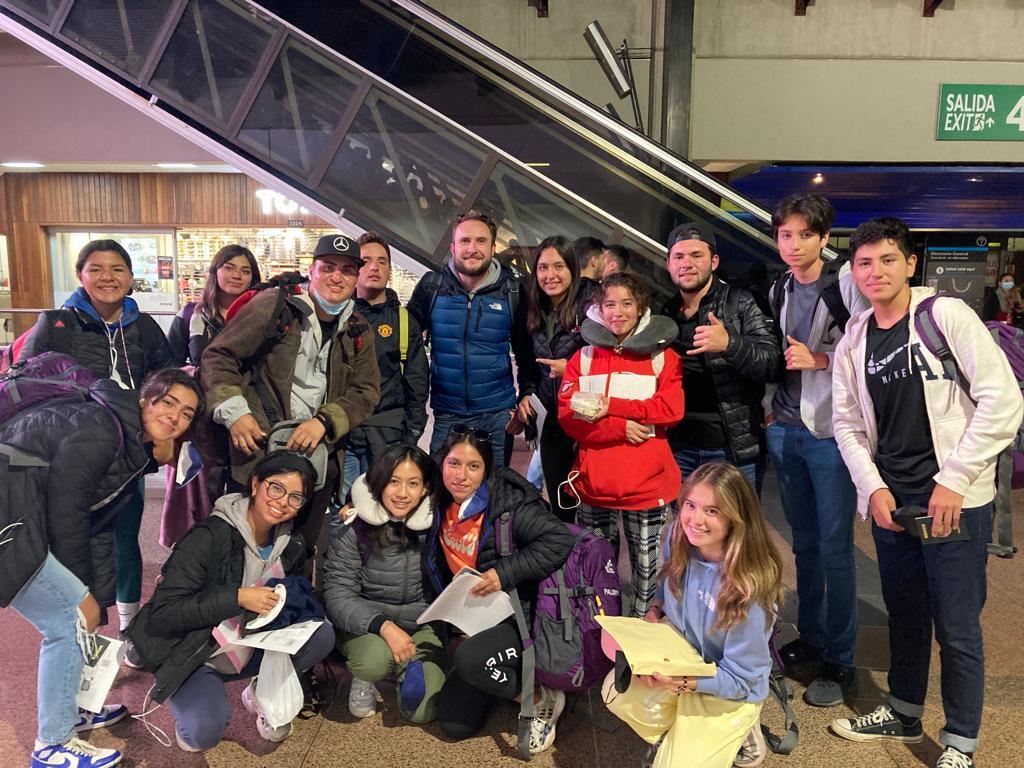
Students arriving at Medellin’s international airport for an educational trip.
At the Airport: Account for Every Student
The airport can be both the most exciting and stressful part of leading a student group journey, especially at a major hub. With crowds, noise, and plenty of distractions, keeping track of every participant can be a challenge.
In fact, this is what I remember most vividly from my first student exchange. I was sixteen and taking an international flight without my family, and both my parents and I were relieved I wasn’t navigating it alone. The airports were chaotic, but our program leader made every step clear, making the experience less intimidating and teaching me good travel habits that stuck with me for years.
Here’s how to make student flights and the airport experience as smooth as possible:
- Set a visible meeting point near the group’s check-in counter.
- Clearly communicate gate and departure details to all participants.
- Delegate airport-specific responsibilities among faculty and other group leaders ahead of time.
- Set clear rules for students temporarily leaving the group (ex., to use the restroom or get a drink).
- Establish a reliable headcount process and use it regularly.
- Know the relevant airport and airline procedures if a student becomes separated from the group.
- Review what to do in case of immigration delays, missing baggage, or missed connections.
- Be prepared to provide comfort to students who may feel anxious about air travel.
- Make sure participants have essential arrival information available offline, including the accommodation address and any other required arrival documentation.
- Know your institution’s missing-student procedure, including contact attempts, local team notification, escalation, and record-keeping requirements.
If you’re still arranging flights for your group, our guide to booking student airline tickets covers group bookings, baggage, documentation, and more.
Transfer the Group Safely
Transportation standards can vary considerably between destinations, so transfers deserve careful attention when planning study abroad programs.
When booking transportation, the faculty leader must:
- Confirm that the transfer is operated by the approved provider.
- Check the vehicle type, seating capacity, seatbelts, and luggage space.
- Confirm the precise pickup time and location.
- Confirm the destination, planned route, approximate journey time, and any stops.
- Keep the driver or guide’s contact information accessible.
- Ask how delays, breakdowns or route changes will be handled and communicated.
- For longer journeys, confirm planned bathroom, food or other stops.
When boarding and during the journey:
- Verify the vehicle and driver against your booking information.
- Reconfirm the destination, approximate arrival time and planned stops.
- Complete a headcount once everyone is onboard and again after any stops or vehicle changes.
- Make sure students know the expectations around seatbelts and remaining with the group.
- Check in with students who feel unwell and follow the appropriate support procedures for your program.
Complete an Early Welfare and Accommodation Check
By the time your group reaches the accommodation, everyone will likely be tired. Communicate with your accommodation contact before arrival and provide room allocations in advance where possible to make check-in easier.
During check-in:
- Verify room allocations, including room types and locations, with the front desk or manager before handing out keys.
- Ask students to be patient and wait in an agreed location while room allocations are finalized.
- Point out emergency exits and remind students how to reach you if they need help.
- Confirm that students can access appropriate drinking water.
- Share internet login details so everyone can get connected.
- Remind students about secure storage options for passports and other valuables.
- Explain protocols for shared bathrooms or kitchens where relevant.
- Offer a private check-in to students who are distressed, unwell, withdrawn, or unable to access something they need.
After everyone has checked in, remain available for a reasonable period to troubleshoot room or access issues alongside accommodation staff.
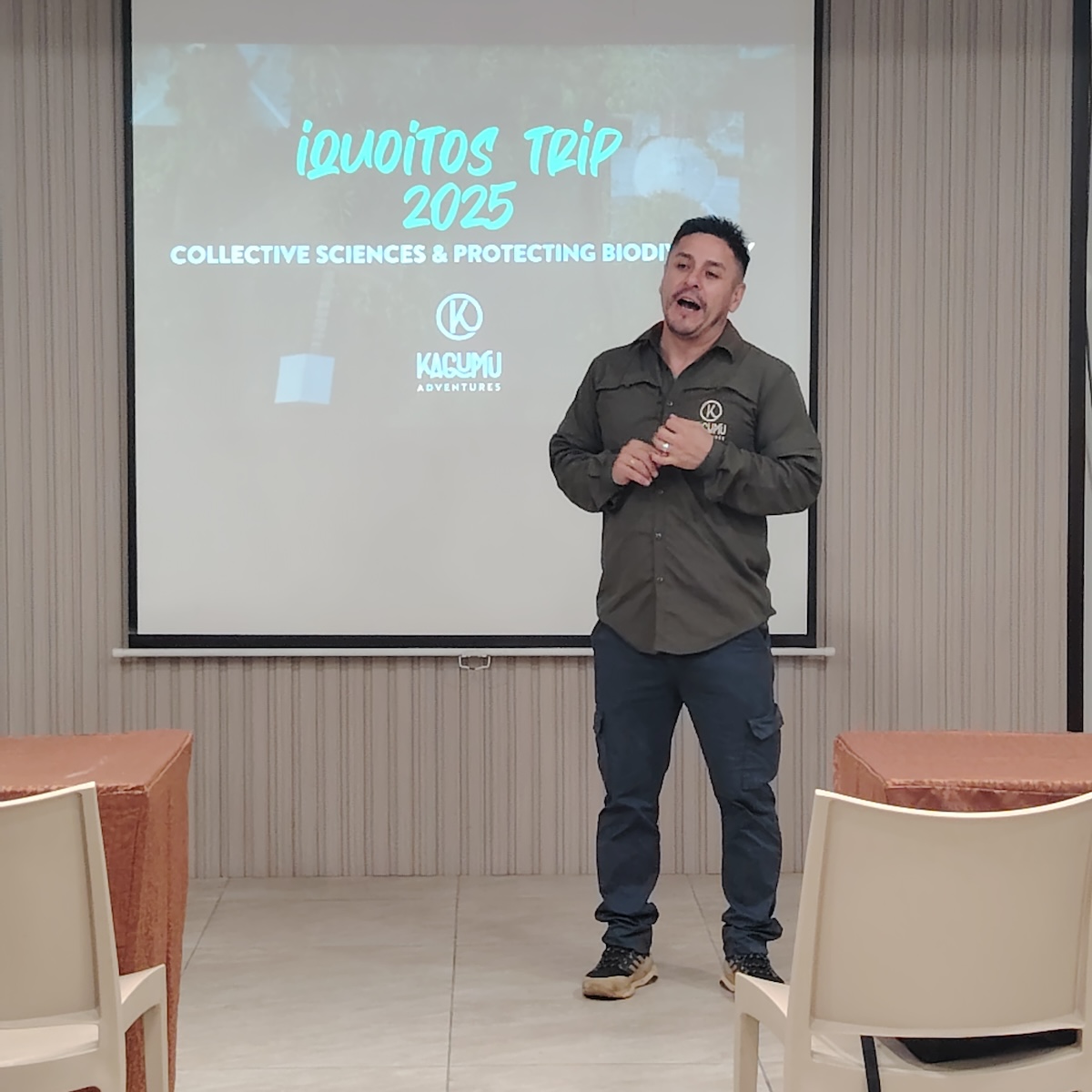
Kagumu tour leader, Angel, giving an orientation talk to a group of students
Give a Practical Orientation Before a Full Cultural Briefing
Your group will likely have received plenty of information before departure. Once they arrive, don’t try to repeat everything at once.
Choose a calm time early in the trip to remind students of the immediate essentials:
- Accommodation name and address
- Movement boundaries and expectations for independent time
- Local transportation
- Payment methods
- Food and drinking water
- Toilets
- The next meeting time and place
- Communication options
- What to do if they become separated from the group or their phone or messaging app fails
- The most important local behavioral and cultural norms
Keep the first briefing practical. There will be time for deeper cultural immersion as the program progresses and students begin interacting with local communities.
Most importantly, don’t make the briefing one-way. Ask a few questions afterward to confirm that students understand what happens next and know what to do if they need help.
Establish Group Routines and Communication
As a faculty leader, one of the best things you can do for your group (and yourself) is to establish simple communication channels and routines early.
Choose One Main Communication Channel
If your institution doesn’t appoint a specific communication channel, you might use WhatsApp, Google Chat, or Slack for routine group updates, depending on institutional requirements and what works reliably at your destination.
Use your main group channel to communicate:
- Daily briefings, including what to expect and bring the next day
- Meeting times and places
- Schedule changes or delays
- Independent time and related instructions
- Headcount or check-in requests
- Faculty availability
Some platforms also allow you to schedule routine messages, such as morning reminders, ahead of time.
Use Smaller Groups When Needed
There are also advantages to small group sizes, particularly when participants are following different schedules or activities. Breaking a larger group into smaller sub-groups can make communication, coordination, and check-ins easier.
Set Expectations for Private and Urgent Communication
Separately, explain how students should handle private matters and urgent concerns. Make sure they know what belongs in the group chat, what should be shared privately, and who they should contact in different situations.
Set expectations for acknowledging important messages too. This can be as simple as asking students to reply or react to confirm they have seen an update.
Remember: a central communication channel also gives students an easy place to check routine updates and itinerary changes.
Prioritize Food, Hydration and Rest
Some students may be experiencing international travel for the first time. It may be their first experience with significant language barriers or culture shock and, for teenagers especially, their first time figuring out many everyday situations in another country.
Add a long travel day, unfamiliar food, a new climate, time-zone changes, and a completely different routine, and there is a lot to adjust to at once.
Program leaders should plan for:
- Suitable food throughout travel, taking into account confirmed allergies, medical dietary requirements and major differences from what the group is accustomed to.
- Access to appropriate drinking water and clear guidance on local drinking-water practices.
- The possible effects of time-zone changes, altitude, heat and long travel days, using authoritative health guidance where appropriate.
Keep the arrival day deliberately light where possible. Give students time to eat, get settled and sleep, and make sure they know the schedule for the following morning.
Reconnect the Group With the Academic Purpose
Once everyone’s immediate needs are taken care of, it’s time to come back to the raison d’être of the trip: its academic purpose. For programs that offer university or college credits, this connection between the travel experience and academic requirements is especially important.
You’ll wear many hats as a faculty leader, including travel planner, coordinator, problem solver, disciplinarian, and occasional photographer. But at the end of the day, you’re an educator.
Help students reconnect with the academic goals of the program by providing:
- A central course question and an explanation of how the first full activity connects to it.
- A simple observation or reflection prompt for the first evening or morning. This could stay the same throughout the program or change each day.
- Clear expectations for field notes, participation, and respectful inquiry.
- Guidance around photographs or recordings before visiting the first learning site.
This is also where the destination begins to become part of the classroom. Cultural activities, conversations, and everyday observations can all contribute to experiential learning when students understand how they connect to the program’s purpose.
Think early on about how these questions and expectations can carry through the rest of the program and even after students return home. As their experiences and perspectives evolve, revisiting the same questions can help them reflect on what they’ve learned and how their understanding has changed.
Conduct a 48-Hour Check and Adjust the Plan
After the first couple of days, take some time to check how the group is settling in. Students have now had a chance to sleep, eat, adjust, navigate their new surroundings, and begin participating in the program, so you may notice needs that weren’t apparent on arrival.
Check in on:
- Attendance and participation
- Sleep, food, and hydration
- Communication and access to group updates
- Accommodation or room concerns
- Health, dietary or accessibility needs that have come up
- Group dynamics
- Understanding of the schedule and program expectations
Give students a way to raise concerns both as a group and privately. Not everything needs an immediate solution. Separate issues that need to be addressed now from feedback that could improve the program later or help with a future cohort.
Then, bring everyone back together for a clear recap of the next 24 hours. Confirm the meeting time and place, clothing or equipment requirements, transportation, meals, preparation, and who students should contact if they have questions.
The goal isn’t to repeat the arrival briefing. It’s to catch what isn’t working, make practical adjustments, and make sure the group is ready to move forward.
How Kagumu Adventures Supports a Strong Arrival
Looking back, I’m incredibly grateful for the faculty and program leaders who made my own student travel experiences so rich. The attention you give to the details and to individual students’ needs can make a lasting difference. In those first unfamiliar days, you’re not only an academic resource, but also an important source of support, reassurance, and safety.
Kagumu Adventures works with universities to develop faculty-led study abroad programs in Latin America, with support for transportation, accommodation, destination orientation, and on-the-ground communication.
The more the local team knows before arrival, the better prepared they can be. Share confirmed student flights, faculty contacts, rooming and accessibility requirements, and your institution’s relevant communication and escalation procedures ahead of time.
At Kagumu, our goal is to take care of the logistics on the ground so faculty leaders can spend less time troubleshooting and more time focusing on their students, their academic goals, and the experience they came to deliver.
Frequently Asked Questions
What should a faculty leader confirm before the group lands?
Confirm student and travel information, accommodation and transportation details, emergency contacts, and team responsibilities.
Make sure important information is accessible offline, and review plans for situations such as missed connections, split arrivals, or students who cannot reach the meeting point.
Program leaders should also review arrival and risk management procedures according to their institution’s policies.
What should happen if a student is delayed or missing at the airport?
A missing or unaccounted-for student should be treated as an emergency and handled according to your institution’s approved procedures.
This may include agreed contact attempts, notifying the appropriate local and university contacts, documenting key information, and escalating according to university policy.
What practical information should be covered in the initial arrival orientation?
Start with what students need immediately: the accommodation address, movement boundaries, transportation, payments, food and drinking water, communication methods, the next meeting point, and what to do if they become separated from the group.
What should the group review at the end of the first 48 hours?
Check that students are settling in and understand the program routines and schedule. Review any concerns around accommodation, communication, food, rest, health, or accessibility needs, and group dynamics, then clearly recap the plan for the next 24 hours.
Lynne Lessard is a Canadian travel advisor and tourism and hospitality marketer specializing in locally rooted travel. Having participated in student exchange, service-learning, and university programs abroad herself, she now works with travelers and travel companies to create and communicate more authentic, personalized experiences that benefit local communities.


