
Travel insights from Latin America
Author Simon Willis | Published on July 8, 2026
Ever wondered how tourism actually affects the lives of locals?
At Kagumu Adventures we are dedicated to promoting a type of travel that genuinely benefits local communities and the way we try to do this is through dialogue.
How do we know the impacts of tourism without actually talking with locals?
While there are many purposeful initiatives in the world, we wanted to reach out to people whose lives are actually affected by tourism and ask them what works for them and what doesn’t.
Being a Colombia-born company we have started with the locals we visit most. With this in mind, our amazing community relations manager Ana Cristina, recently gathered survey responses from locals in Colombia.
In order to gather a diverse range of opinions, we interviewed people living in 16 different regions in Colombia. This spanned neighbourhoods in cities like Bogota and Medellin and smaller towns like El Carmen de Viboral and Afro-Colombian towns like San Palenque de Basilio. We also gathered responses from locals in indigenous communities, floating villages, coastal towns, and fishing villages.
From the results we have identified a few recurring themes and thus divided these into five sections along with some Kagumu responsible traveler tips for you all!
Listening to Local Storytellers vs Propagating a False Narrative
In areas heavily affected by Colombia’s past conflicts, tourism has become a powerful tool for identity reconstruction and healing.
Jeison Castaño “Jeihhco” – a local living in a popular neighbourhood in Medellin called Comuna 13 – believes tourism has the power to change his territory’s narrative, breaking stigmas and funding youth training initiatives.
However, he notes several negative impacts of tourism too.
“While some travelers come to listen, others seek dark tourism,” he says.
“They fixate entirely on past violence and drugs, which causes emotional exhaustion and commercializes local pain.”
Asked about the biggest challenges of tourism, Jeison also notes that “gentrification” is a real issue that has seen real estate values and rent skyrocketing, more often than not pricing locals out completely.
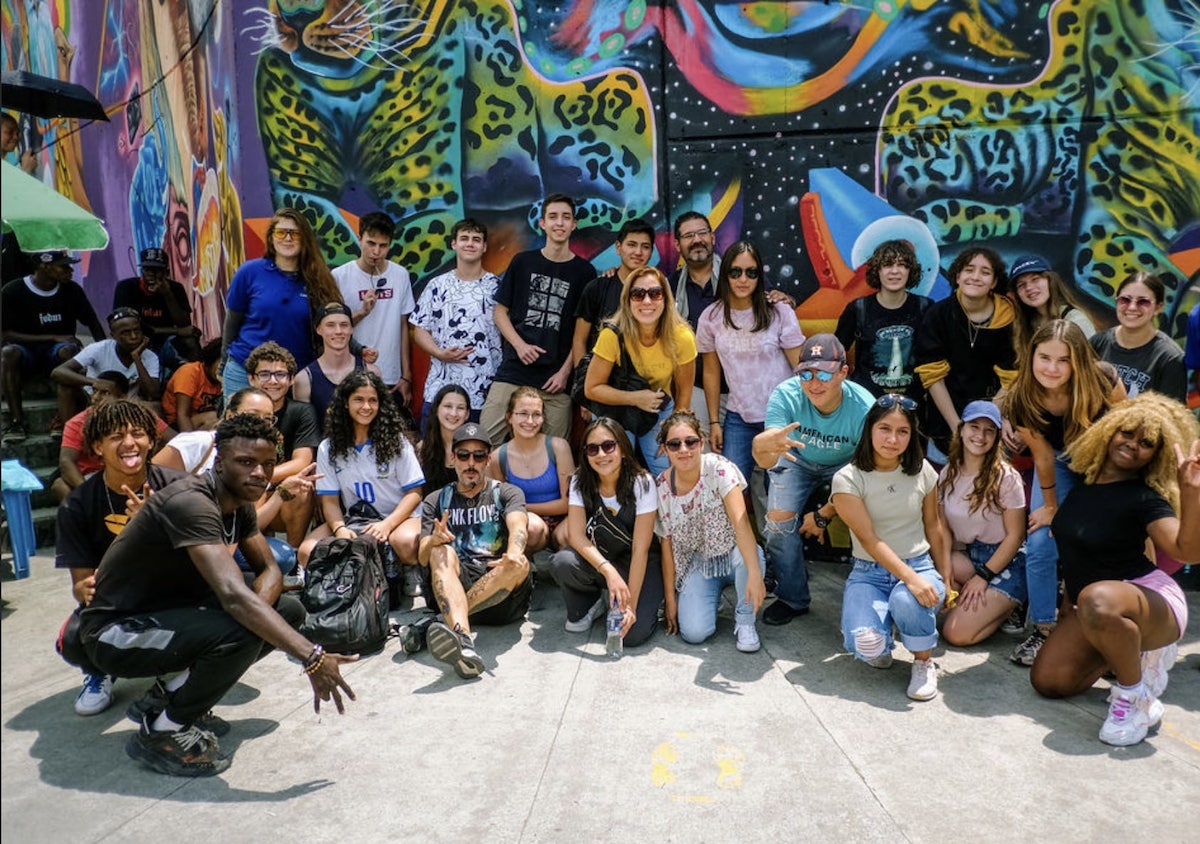
Kagumu group of students visiting Comuna 13 in 2022
He also points to foreign entities treating the community purely as a high-profit business.
“I see a theft of ideas and exploitation of local history by external operators who take the majority of profits without leaving a positive impact,” he says.
“Companies paying minimum wage or exploiting the local image without supporting local arts.”
Kagumu Responsible Traveler Tips:
- Seek the true narrative of a community by visiting a neighborhood with a local or a locally-registered company.
- Avoid glamorizing past events that have brought devastation to people’s lives.
- Decide whether you should actually visit a community or not. If it will just bring you pleasure with no visible positive impact for the locals, avoid it.
Empowering Conservationists vs Degrading the Local Environment
As travelers, we leave footprints, but our hosts are the ones left to manage the ecological weight of our presence.
Across Colombia’s coastal and rural ecosystems, waste management remains a critical issue.
Rony Monsalve and Yoel Yesith Londoño Moncaris, both from the fishing village of La Boquilla in Cartagena, operate community and eco-tourism projects in the fragile mangrove ecosystems.
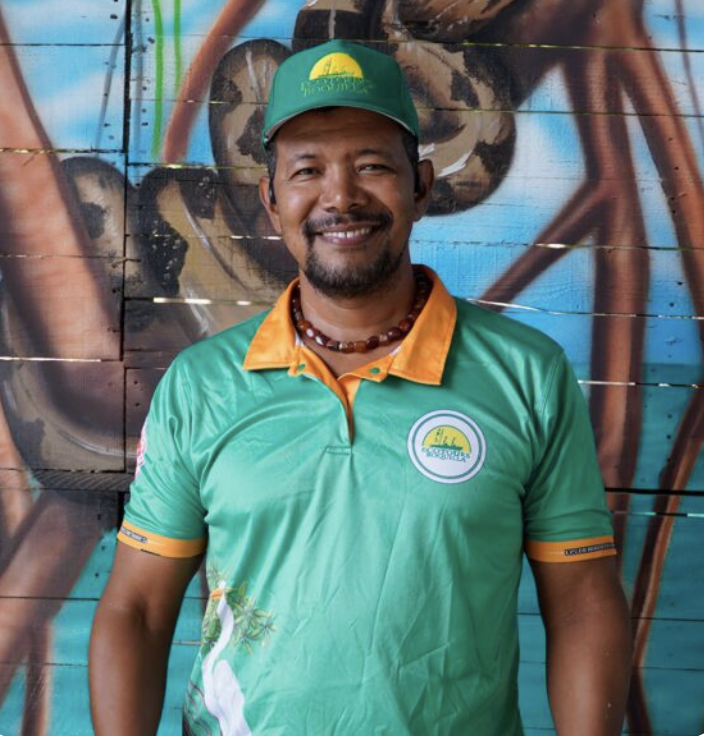
Rony Monsalve, a community member leading fishing experiences for travellers in La Boquilla, Cartagena
They told us that while tourism can strengthen community initiatives and boost income, mass tourism focused solely on “sun and beach” can leave massive amounts of solid waste behind, threatening the environment.
In Cienaga, a town on Colombia’s Caribbean coast, Jhon Cantillo Ruiz views tourism as a driver for social infrastructure, helping secure new solutions for water sanitation issues.
He warns, however, that local regulation is key. He says when this exists, tourism can be a force for good. When it doesn’t, it can have a negative impact.
“There is an inability to plan for solutions to water sanitation due to lack of authority regulation,” he says.
While tourism has brought visible improvements to local infrastructure and amenities in Santa Marta, Lucelly Torres, from the Kutunsama Arhuaco Indigenous Reserve, points out that poor “waste management” remains a glaring, unresolved issue that is a “great challenge” for “ever expanding tourism.”
Kagumu Responsible Traveler Tips:
- Avoid buying single-use plastic and take all your trash with you, wherever you go.
- Donate to local conservation organizations when you visit communities that are vulnerable to environmental degradation.
- Choose more eco-friendly transport. Think: bikes, scooters, electric vehicles, public transport and, of course, walking.
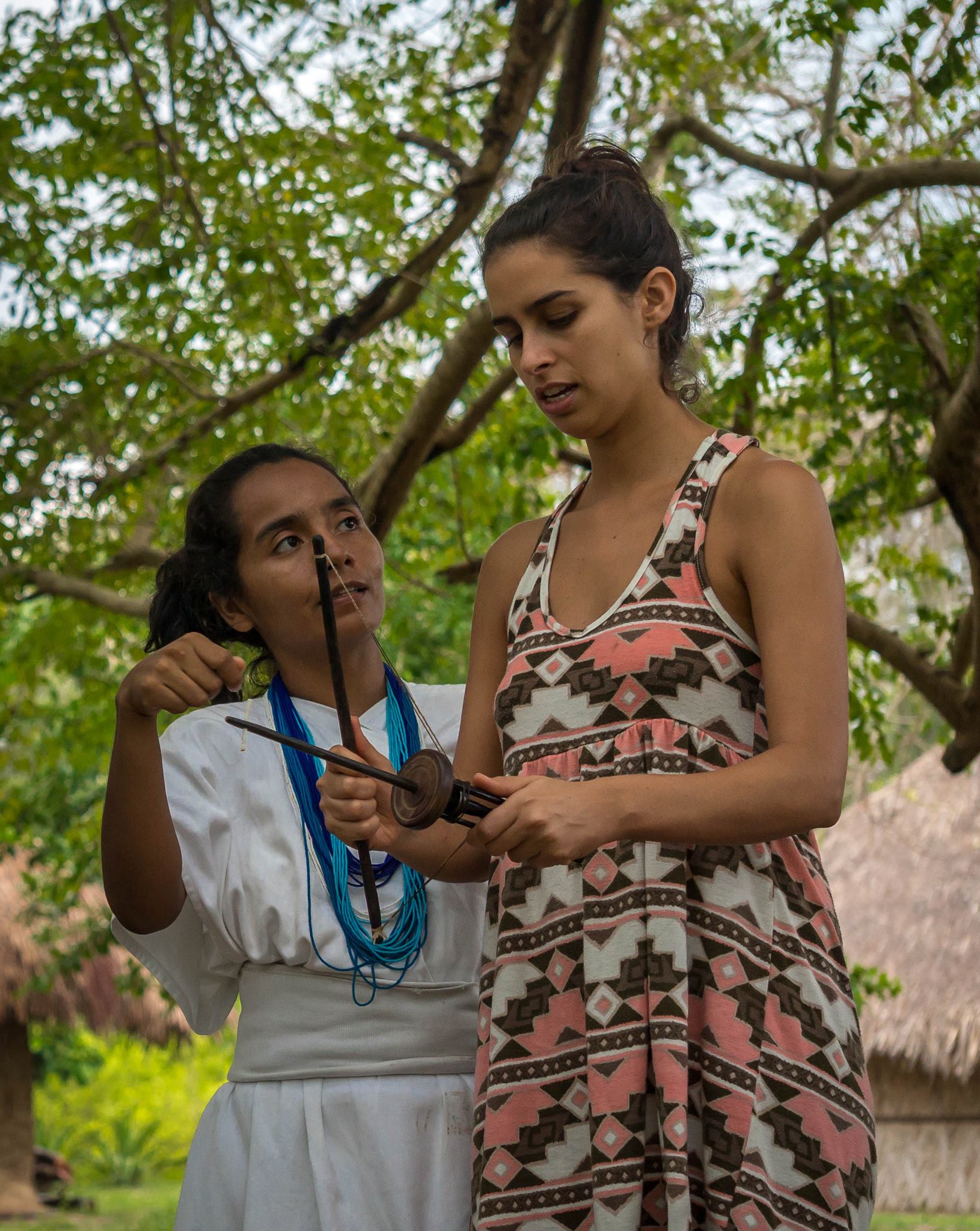
Lucelly Torres teaching a visitor ancient Arhuaco bag weaving techniques
Preservation of Ancestral Traditions vs Colonizing Cultures
Travel has the power to promote the preservation of ancestral traditions…while also possessing the potential to colonize and destroy cultures and heritage.
Carlos Zambrano from the Reserva Natural San Luis de Palenque, says tourism is actively rescuing traditions in his region situated close to Cartagena.
He notes the primary roadblock for further protection being a “distinct lack of political will from governing bodies.”
Carlos Rincón, a resident of the Sierra Nevada de Santa Marta, champions ethno-tourism that respects the environment and local culture.
His biggest grievance is low-quality tourism driven by “unqualified guides”, where visitors stop solely for a photo without leaving fair financial compensation for the community.
Meanwhile, for José Gabriel Moscote, a resident of the Gotsezhi Wiwa Community in Santa Marta, tourism funds traditional offerings, helps reclaim ancestral territories, and facilitates language exchange.
However Jose says that standing in the way of a more balanced cultural exchange are “language barriers” and “disrespectful tourists taking advantage of the community.”
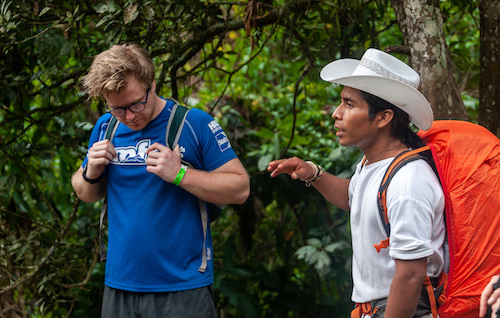
José Gabriel Moscote leading a group of travellers along the Lost City trek
Kagumu Responsible Traveler Tips:
- Seek out local, responsible guides when visiting indigenous communities.
- Learn at least a few words and phrases of the local language before visiting.
- Go at the pace of the local community. Eat when they eat, eat what they eat, respect their way of living.
- Ask locals if you can take photos. Never take photos without express permission.
Economic Inclusivity vs Economic Exploitation
Tourism is a powerful economic engine that can provide vital economic benefits for forgotten demographics. The balance has to be right, however. If not, the result can make the rich richer through exploitation of locals.
The owners of Café de la Cima – a project in the coffee region of Fredonia, Antioquia, say that they have experienced the economic power of travel.
They say increased visitor numbers to their farms and other coffee farms have generated crucial job opportunities for “female heads of households” and “stimulated the local economy through regional product consumption.”
Meanwhile in Medellin, Esteban Higuita, a guide working in the inner-city neighborhoods has witnessed the gritty reality of rapid tourism growth, noting that money is not going to those who need it most but to “unregulated vendors”, and even those using tourism as extortion, bringing “a complex web of underlying community problems.”
Kagumu Responsible Traveler Tips:
- Avoid giving cash to local children – this can increase the likelihood of extortion and has knock-on impacts.
- Avoid haggling.
- Buy souvenirs from local markets or direct from communities.
The Conscious Traveler vs The Privileged Tourist
To close the loop, industry operators and seasoned guides reinforce that the ultimate goal of travel should be conscious, mutual transformation.
Lady Saavedra, a resident in Bogotá, noted that tourism beautifully promotes pride in local traditions and conserves patrimonial spaces. The continuous challenge, she notes, is “balancing visitor flows so they do not pressure natural resources or alter delicate local dynamics.”
Over in San Agustin, David Roa Martín sees tourism as a vital dialogue space across different backgrounds.
However, he sharply criticizes “trend-driven” or irresponsible tourism. He recalls the disruptive nature of misaligned tourists (such as “those riding horses while intoxicated”) and points out a lack of long-term, holistic collaboration between commercial businesses and local communities.
Mónica Osorio, a resident in the Antioquia town of El Carmen de Viboral says that a positive of tourism could be for projects to “raise awareness about healthy, sustainable food systems”.
She does caution, however, against tourism treated purely as a passing trend (“moda”), which leads to overcrowding and natural resource exploitation.
Kagumu Responsible Traveler Tips:
- Think about the way you act when in a new community – avoid getting intoxicated for example.
- Think carefully about what you post as photos online. Does this add to the “trend” of an already overcrowded area?
It’s clear from this that our responsibility as travelers is becoming bigger and bigger.
Travelers must reject the urge to consume a destination merely for a photo or a trend. Good travelers should take waste with them, respect local boundaries, support strictly homegrown operators, and arrive ready to listen. And this is a bare minimum.
Tourism has the power to go beyond that and actively support local conservation efforts with donations and time. It should bring new sustainable economic opportunities to neglected areas, regions and demographics.
Most of all tourism needs to listen more to the people whose lives are affected and act accordingly.
As for us, we will continue to use the results to tailor our itineraries and provide more impactful journeys for locals.


